Hell Let Loose: Vietnam Beta Insights: Essential DLSS Tweaks and the Teamplay Challenge
Explore the community reactions to the Hell Let Loose: Vietnam beta, including vital Nvidia DLSS fixes for jungle visibility and the ongoing communication crisis.
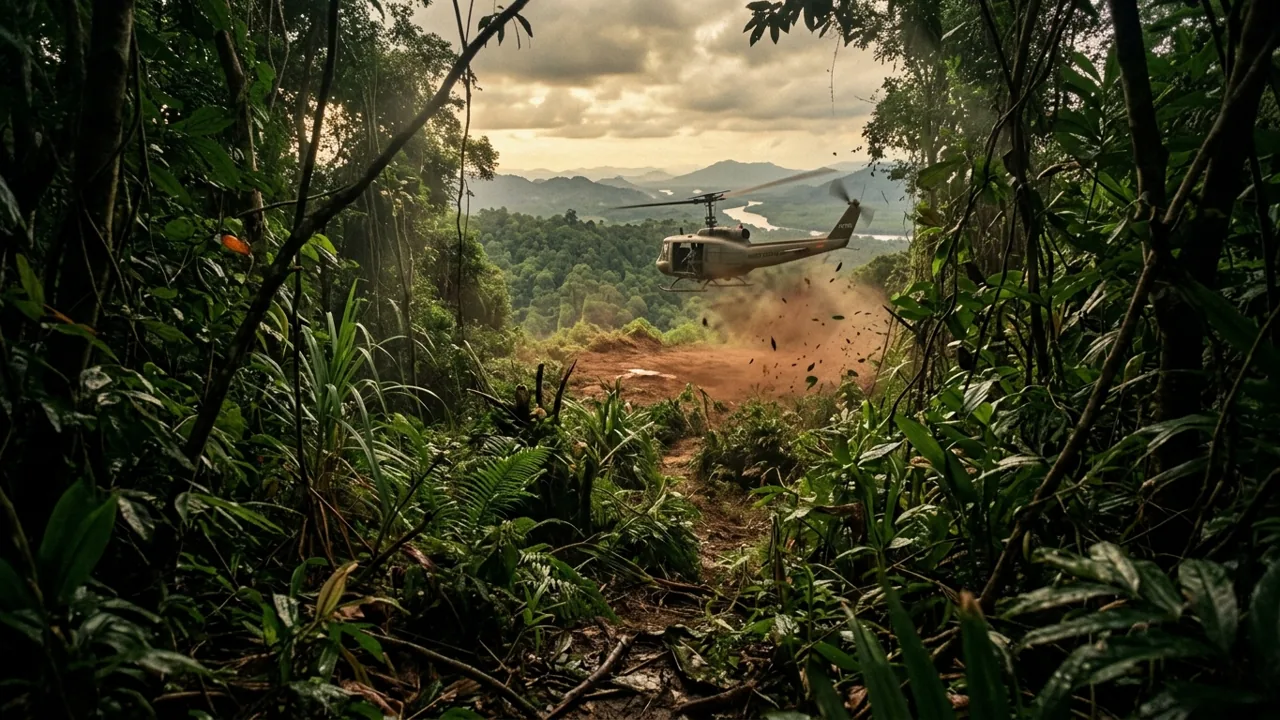
The final pre-launch crossplay playtest for Hell Let Loose: Vietnam is currently in full swing, giving players on PC, PlayStation 5, and Xbox Series X|S their most comprehensive look yet at the asymmetrical 50v50 warfare coming this August. Transitioning from the established World War II European theater to the dense, unpredictable environments of the Vietnam War (1965–1973) is a massive leap for the franchise. Expression Games and Team17 have introduced a suite of new mechanics, including player-controlled helicopters, intricate tunnel networks, and unforgiving riverine combat.
As thousands of players flood the servers this weekend, a clear picture is emerging of what works, what needs fixing before the expected August 13 launch, and how the community is adapting to the harsh realities of jungle warfare. While veteran players are praising the refreshed gameplay loop, significant technical hurdles—particularly regarding visual clarity on PC and recurring crashes—are dominating community discussions. Furthermore, the reliance on close-knit communication is proving to be a stumbling block for public matches.
Here is a detailed breakdown of the community’s impressions, known technical issues, and the essential tweaks you need to survive the beta.
The Teamplay Crisis: Silence is Deadly in the Jungle
Hell Let Loose has always been a franchise that lives or dies on voice communication. A silent squad is an ineffective squad. However, early reports from the Hell Let Loose: Vietnam beta suggest that a significant portion of the player base is operating in complete silence.
Newcomers testing the waters are expressing frustration over the lack of coordination. In a game where the US military relies heavily on calling in UH-1 Huey helicopter gunships and the North Vietnamese forces (NVA/VC) utilize complex, hidden tunnel networks to flank, the absence of VoIP chatter is heavily detrimental. One player highlighted that after several hours in the beta, squad members were completely ignoring map markers, pinged orders, and Commander requests.
This communication breakdown is especially punishing in the Vietnam setting. The asymmetrical nature of the factions means that standard frontal assaults rarely work. If a US squad gets pinned down by VC guerillas firing from an elevated, camouflaged position, they need their Squad Leader to communicate those coordinates to the Commander for an artillery strike or a napalm run. Without a mic, the squad simply bleeds tickets. Similarly, North Vietnamese forces must coordinate to establish spawn points in hidden tunnels; if an engineer is building a tunnel entrance and no one defends them, the entire flank collapses.
Part of this silence might not be intentional. Community reports indicate that the in-game VoIP system is suffering from intermittent bugs, with audio occasionally cutting out entirely for some users. Expression Games is reportedly monitoring these audio drops, but for now, players are strongly encouraged to utilize their microphones and verify their audio settings in the game menu. If you are struggling with the basics of squad communication, reviewing a beginner guide can provide the foundational knowledge needed to effectively relay information.
Overcoming the Canopy: Essential Nvidia DLSS Tweaks
One of the most heavily discussed technical issues during this playtest revolves around visual clarity. Powered by Unreal Engine 5, the jungles of Hell Let Loose: Vietnam are incredibly dense, lush, and realistically lit. However, for PC players using Nvidia graphics cards, this fidelity is currently being undermined by severe blurring issues caused by the game’s default Deep Learning Super Sampling (DLSS) implementation.
Players are finding it incredibly difficult to spot enemies hiding in the foliage. When the Viet Cong are wearing natural greens and browns, and the DLSS algorithm smears the foliage during movement, it creates a visual soup that makes target acquisition nearly impossible. You might only see a muzzle flash before you are sent back to the deploy screen.
Fortunately, the PC community has discovered a reliable workaround utilizing the Nvidia App to force a different DLSS preset, drastically sharpening the image and making enemies much easier to spot. If you are struggling with blurry visuals, follow these steps to apply the fix:
- Open the Nvidia App on your desktop.
- Navigate to the Graphics tab.
- Click on Add a Program and locate your Hell Let Loose: Vietnam playtest folder. The default path is usually
Drive:\SteamLibrary\steamapps\common\Hell Let Loose - Vietnam Playtest\HLLVietnam\Binaries\Win64. - Select the executable file named
HLLVietnamPlaytest-Win64-Shipping. - Scroll down to find the DLSS Override - Model Presets option.
- Change this setting to Custom, and then adjust the Super Resolution to Preset M. Apply the changes.
- If you are utilizing Frame Generation, the community also recommends setting it to Preset B for optimal performance.
- Launch the game, and ensure your in-game DLSS setting is on either Balanced or Performance mode.
Preset M applies a heavier sharpening pass than the default presets used by the game. Players utilizing this tweak are reporting a massive improvement in their ability to track movement through the jungle canopy and spot NVA combatants hiding in the brush. In a game where engaging targets at 100 meters through thick vegetation is the norm, this visual clarity is a massive competitive advantage.
Hardware Crashes and PlayStation 5 Access Issues
No beta is without its technical faults, and Hell Let Loose: Vietnam is experiencing its fair share of stability issues across different hardware configurations.
On the PC front, users with AMD hardware—specifically configurations similar to the Ryzen 7 5700X paired with a Radeon RX 7700 XT—are reporting consistent, hard crashes to the desktop. These crashes reportedly occur shortly after deploying, often within the first ten minutes of a match, regardless of graphical settings. While drivers have been updated, the crashes persist, pointing toward an optimization conflict with AMD architecture in this specific build of the game. Team17 has yet to confirm a hotfix for this specific AMD crashing loop, so affected players may have to wait for the final release build to see stability improvements.
Console players are also facing their own set of hurdles. PlayStation 5 users, particularly in European regions like the Czech Republic, have reported being entirely unable to find the playtest client on the PlayStation Store. Searching for the game only yields the Deluxe Edition pre-order page or the original World War II title. Furthermore, some players utilizing the PlayStation 5 Pro are experiencing graphical artifacting followed by application crashes when attempting to join active servers.
These stability problems underscore the importance of the playtest. Expression Games requires this telemetry data to optimize the final build. If you are researching the system requirements for the August launch, keep in mind that the beta’s performance is not entirely representative of the polished retail version.
Map Balance and the Asymmetrical Meta
Despite the technical bumps and communication frustrations, the core gameplay loop of Hell Let Loose: Vietnam is receiving high praise, particularly from veterans of the series. Some long-time Xbox Series X players have boldly claimed they are having more fun in the Vietnam beta than in the current iteration of the WWII game.
Much of this praise is directed at the level design, specifically the Đắk Tô Airfield map featured in the playtest. Đắk Tô provides a brilliant showcase of the new mechanics. The map forces teams to constantly transition between fighting in dense, claustrophobic jungle sectors and defending wide-open, highly contested airstrip structures.
The asymmetry is on full display here. US forces frequently utilize the new helicopters to rapidly deploy infantry to the flanks of the airfield, utilizing the speed of the Hueys to bypass heavy ground resistance. Conversely, the NVA and VC teams are making excellent use of the tunnel networks to survive the devastating US artillery barrages. When an airstrike is called in, North Vietnamese forces can retreat underground, wait out the bombardment, and immediately pop back up to defend the point, creating a frantic, Whac-A-Mole style of combat that feels incredibly authentic to the era.
The weapon handling for the 1960s arsenal is also striking a chord. The recoil patterns and engagement distances feel distinct from the M1 Garands and Kar98ks of the previous game. Fully automatic fire is much more prevalent with the M16 and AK-47, leading to intense, chaotic firefights that emphasize suppressing fire over precision marksmanship.
The Road to Launch
The Hell Let Loose: Vietnam crossplay playtest runs through Monday, July 27, offering a crucial window for the developers to stress-test their servers and identify critical bugs. The feedback gathered regarding the VoIP cutouts, AMD graphics crashes, and Nvidia DLSS blurring will be instrumental in the final weeks of development.
If the community can overcome the communication barrier and embrace the necessity of the microphone, the tactical depth of the Vietnam setting promises an experience that surpasses its WWII predecessor. With the release date currently expected for August 13, 2026, Expression Games has a tight window to deploy the necessary optimizations. Until then, tweak your DLSS settings, check your microphone connection, and keep your head down in the jungle.