Hell Let Loose: Vietnam vs WWII Original: How TTK and Audio Changes Are Dividing Veterans
Recent playtests for Hell Let Loose: Vietnam have sparked intense debate among veterans. We examine the controversial TTK changes, audio shifts, and core mechanics.
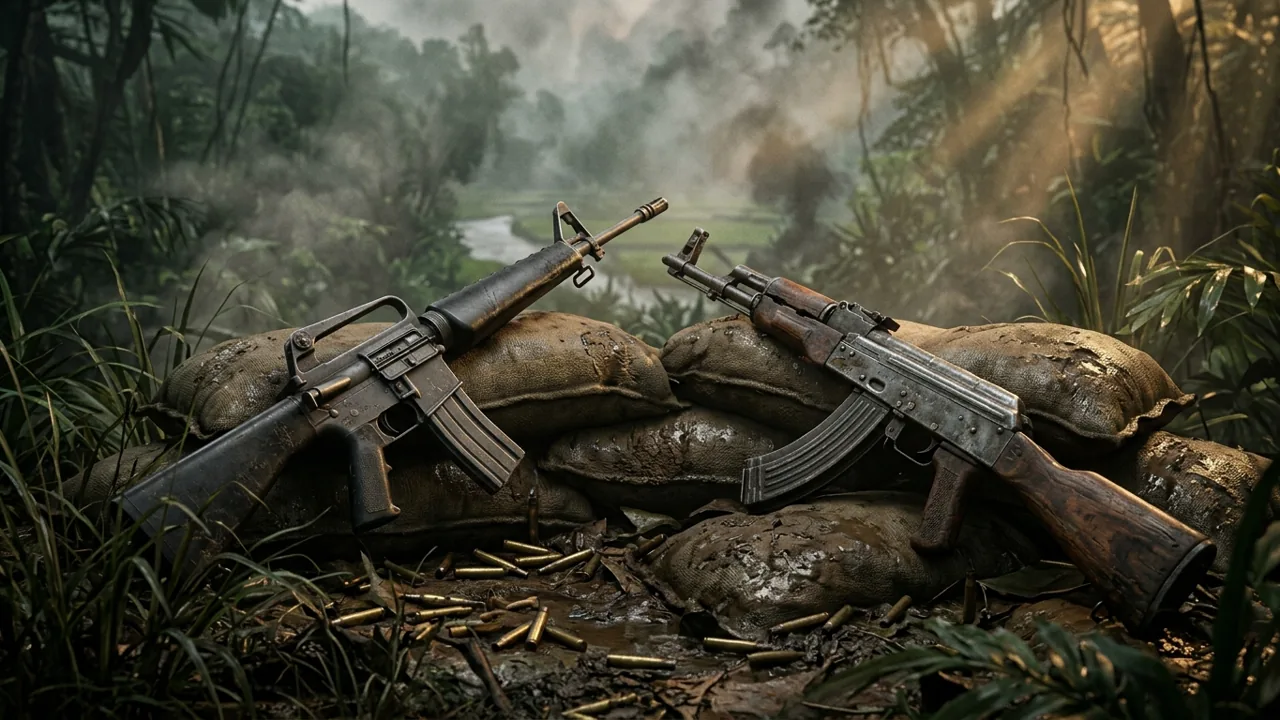
The jump from the European theater of World War II to the dense jungles of Southeast Asia is more than just a change of scenery. For Hell Let Loose: Vietnam, built from the ground up on Unreal Engine 5 by Expression Games and published by Team17, the shift in eras brings profound alterations to the tactical sandbox. The original Hell Let Loose built a fiercely loyal audience by prioritizing grueling pacing, strict logistics, and punishing lethality. But as recent console and PC playtests have shown, adapting that formula to the 1965–1973 Vietnam War is proving to be a complex balancing act.
Thousands of veteran players deployed into the recent testing phases to experience the newly introduced asymmetrical warfare. While the introduction of UH-1 Huey helicopters, sprawling NVA tunnel networks, and riverine combat has generated significant excitement, two distinct pain points have emerged in community discussions: the Time to Kill (TTK) and the game’s atmospheric audio direction.
We are examining what separates the upcoming Vietnam iteration from its WWII predecessor, analyzing the latest community feedback and exploring why certain mechanical departures are generating friction among long-time fans ahead of the scheduled August 2026 launch.
The TTK Controversy: Has the Hardcore Edge Softened?
Perhaps the most vocal criticism emerging from the latest playtests revolves around the gunplay—specifically, the Time to Kill. In the original WWII title, combat is defined by the One-Hit-Kill (OHK) potential of almost every primary weapon. Whether you are wielding an M1 Garand, a Kar98k, or a Lee-Enfield, landing a single shot to the torso generally guarantees a kill. This extreme lethality forces players to move cautiously, prioritize cover, and rely heavily on smoke grenades and suppressing fire.
In Hell Let Loose: Vietnam, players are reporting a noticeably higher TTK. According to widespread feedback on community forums, landing two or even three shots with a 1960s battle rifle or assault rifle is often required to drop an enemy combatant. One frustrated tester noted that surviving multiple torso impacts makes the gunplay feel dangerously close to casual arcade shooters like the Battlefield series, arguing that the removal of OHK mechanics compromises the franchise’s hardcore identity.
The developers have not officially detailed the exact damage values for the final release, but we can hypothesize why this shift might be happening. The arsenal of the 1960s is vastly different from the 1940s. With standard-issue weapons shifting from bolt-action and semi-automatic rifles to fully automatic platforms like the M16 and AK-47, the volume of fire on the battlefield has increased exponentially. (For a full breakdown of the confirmed arsenal, check our weapons guide).
In the original game, a squad armed primarily with bolt-action rifles had to carefully pick their shots. In Vietnam, an American squad equipped with M16s and M60 machine guns, facing off against an NVA squad with AK-47s and RPDs, unleashes a torrent of lead that is fundamentally different in character. If Expression Games maintained the exact OHK model of the original game in an environment where every rifleman can spray 30 rounds in seconds through dense foliage, players might find themselves dying instantly and repeatedly to unseen enemies shooting blindly into the brush. A slightly extended TTK is likely a deliberate design choice to afford players a fraction of a second to react and dive for the mud.
However, for a community that prides itself on punishing realism, sacrificing lethality for playability is a tough pill to swallow. Veterans are making it clear: they do not want a casual stroll through the jungle with spongy enemies; they want the unforgiving lethality of Hell Let Loose.
Audio and Atmosphere: The Demand for Gritty Immersion
Another major point of contention centers on the game’s auditory atmosphere. The original game is widely praised for its terrifyingly accurate sound design. The absence of background music during matches means that players are left entirely with the sounds of war—the crack of incoming rounds, the distant rumble of tank treads, the proximity voice chat of panicked squadmates, and the deafening explosions of artillery strikes. The silence between firefights builds immense psychological tension.
During the recent playtests, veteran commanders and squad leaders noticed a jarring addition: dynamic music playing during sector captures and between matches. Testers have described this audio cue as feeling like “casino or arcade-style victory music,” which they argue completely shatters the immersion.
In a tactical shooter where hearing enemy footsteps creeping through a trench, the rustling of elephant grass, or the distinctive sound of an M16 reloading can mean the difference between holding a point or losing a garrison, intrusive music is more than just a stylistic annoyance; it is a competitive detriment. The community is overwhelmingly requesting that the developers scale back these musical additions. Instead of generic action tracks, players are asking for period-appropriate environmental ambience—the sound of monsoon rain, the hum of insects in the jungle, and the distant, anxiety-inducing thrum of helicopter rotors—letting the battlefield speak for itself.
Core Mechanical Differences: Symmetrical vs. Asymmetrical Warfare
Beyond gunplay and audio, the structural flow of a match in Hell Let Loose: Vietnam represents a massive departure from the original. As recently highlighted by gaming outlets like GamingBolt analyzing the differences between the two titles, the shift to strictly asymmetrical warfare completely upends the traditional meta.
In the WWII original, factions are generally symmetrical. The US and German forces might have different tank models and slight weapon variations, but they fundamentally play the same way: build nodes, set up garrisons, and push a linear frontline across rural European towns and fields.
The Vietnam War was famously not fought on clean frontlines, and the new game reflects this.
- The US Forces rely heavily on air mobility and overwhelming firepower. The iconic UH-1 Huey helicopters are not just set dressing; they are central to the logistics system, capable of dropping infantry squads deep behind enemy lines and securing volatile landing zones. (Read more in our helicopter guide).
- The North Vietnamese Army (NVA) and Viet Cong (VC) counter this with the extensive tunnel networks. Instead of relying on vulnerable supply trucks, the NVA can reportedly utilize subterranean spawns and hidden exits to ambush US patrols, making the map highly porous and unpredictable. (For details on how to counter this, see our tunnel guide).
Additionally, the introduction of riverine combat adds an entirely new dimension for the franchise. The Mekong Delta and other waterway-heavy maps will require squads to navigate shallow rivers using PBRs (Patrol Boat, River), leaving them highly exposed to shoreline ambushes. This triad of warfare—air, ground/tunnels, and water—creates a deeply complex tactical environment that vastly outpaces the complexity of a standard WWII infantry assault.
This asymmetry means that a Commander’s role will drastically change depending on which faction they are leading. A US Commander will be managing airspace, coordinating napalm strikes, and organizing rotary-wing transport. An NVA Commander will be focused on guerrilla tactics, maintaining the secrecy of their tunnel infrastructure, and setting traps along the river deltas to counter US patrol boats. You can explore the specific responsibilities of these factions in our factions guide.
The Evolution of Logistics and Pacing
The introduction of helicopters and tunnels naturally affects the pacing of the game. In WWII, a significant portion of the match involves running across open fields or slowly driving a supply truck to build a flank garrison. This deliberate, slow pacing forced squads to communicate and plan their movements carefully. Taking out an enemy garrison often required a coordinated flanking maneuver that could take ten to fifteen minutes to execute.
With helicopters capable of traversing the map in moments, and tunnels allowing instantaneous underground repositioning, there is a legitimate concern that the pacing will become too frantic. We have previously discussed this dynamic in our coverage of the pacing debate, noting that faster mobility risks turning the tactical shooter into a fragmented experience where frontlines cease to exist entirely.
For veteran Commanders who have spent thousands of hours mastering the rigid logistics of the original game, the new systems present a steep learning curve. The challenge for Expression Games will be ensuring that the speed of air assaults and the stealth of the tunnel systems do not bypass the need for squad-level communication. If an entire team can simply spawn via a tunnel directly onto an objective, or drop from a helicopter straight into the capture zone without penalty, the methodical, inch-by-inch territory control that defined the franchise could be lost.
Looking Ahead: Balancing Two Audiences
As we move closer to the scheduled release date of August 13, 2026, the feedback from these pre-launch playtests is invaluable. The developers at Expression Games and the publishers at Team17 have a monumental task ahead of them. They must deliver a fresh, innovative experience that accurately captures the unique nature of the Vietnam War, while simultaneously preserving the hardcore, uncompromising spirit of the WWII title that fans fell in love with.
It is important to remember that the game is still in its beta testing phases. Weapon damage models, TTK values, and audio implementation are heavily subject to change based on community testing. The development team has already shown a willingness to engage with player feedback, and upcoming optimization patches are expected to address many of the technical concerns.
Whether the final product will adjust the TTK to satisfy the OHK purists, or mute the arcade-style music in favor of harrowing jungle silence, remains to be seen. But one thing is certain: the transition from Normandy to the Mekong Delta is shaping up to be the most significant evolution the tactical shooter genre has seen in years.
Make sure to check our beginner guide and keep an eye on the system requirements as we prepare for the final pre-launch testing phases to go live.