Analyzing the 20-Minute US Infantry Gameplay in Hell Let Loose: Vietnam
We break down the recent 20-minute US Infantry gameplay footage, analyzing air mobility, jungle tactics, and what newcomers should expect ahead of launch.
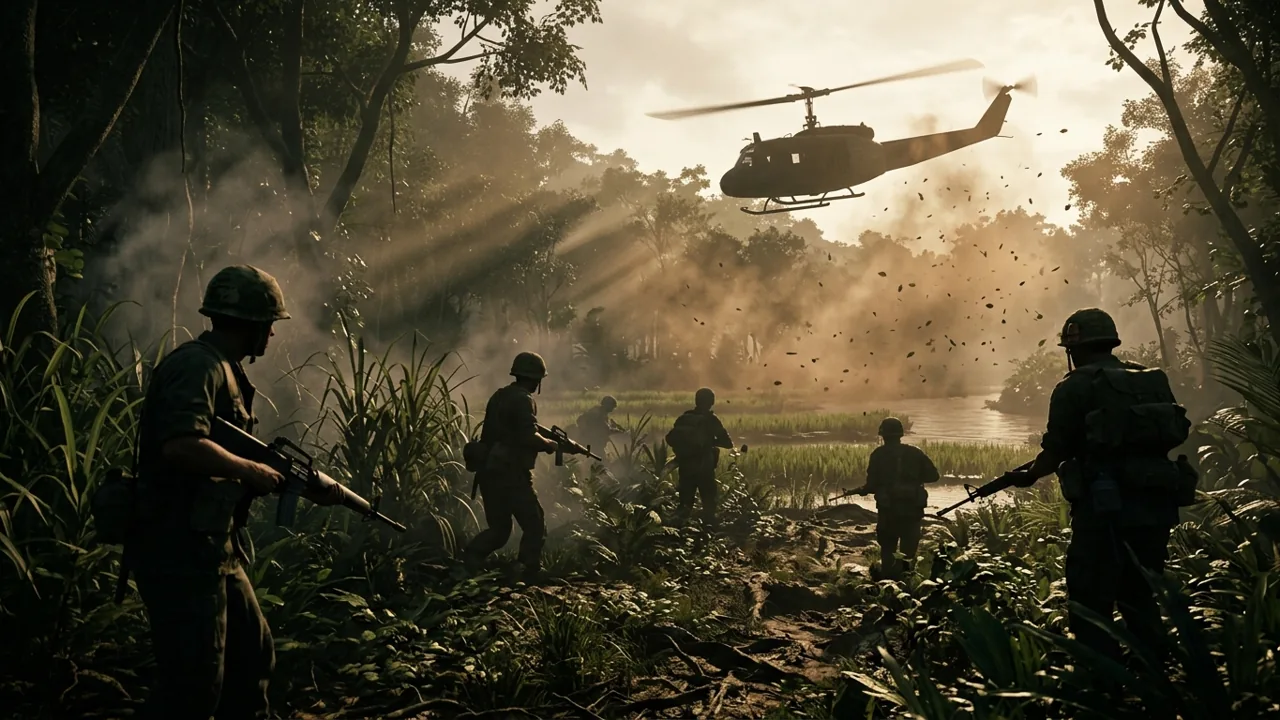
With the August 13 release date rapidly approaching, Expression Games and Team17 are preparing to launch Hell Let Loose: Vietnam across PC, PlayStation 5, and Xbox Series X|S. While the community has been dissecting brief trailers and developer updates for months, a recently surfaced 20-minute unedited gameplay video focusing on United States Infantry has provided the most authentic look yet at what players will actually experience on the ground.
This extended footage confirms much of what we expected about the transition to Unreal Engine 5, but seeing the mechanics flow together in a continuous match completely recontextualizes the pacing. Unlike the sweeping fields of Normandy or the frozen forests of Foy from the 2021 original, the 1960s jungle presents an entirely different tactical puzzle. As asymmetric warfare takes center stage, the US faction’s reliance on air mobility directly clashes with the North Vietnamese Army (NVA) and Viet Cong’s mastery of the terrain.
Simultaneously, we are seeing a massive influx of fresh blood in the community forums, with many console players and tactical shooter veterans preparing to make this their very first Hell Let Loose experience. Here is a detailed breakdown of what the recent gameplay footage reveals, and how the community is preparing for launch.
Air Mobility and the Reality of Hot LZs
The most striking element of the recent 20-minute footage is how fundamentally the UH-1 Huey changes troop deployment. For the United States faction, walking from a static garrison is no longer the default method of reaching the frontline. The footage shows entire squads piling into helicopters for rapid insertions across the map, transforming the way territory is contested.
However, this speed comes with severe risks. The video highlights exactly what happens when a squad leader misjudges a landing zone. As the Huey flares to drop its troops, it becomes a massive, loud target. The audio design here is oppressive; the iconic rotor blades mask the sound of incoming ground fire until the exact moment bullets start piercing the fuselage. In the WWII title, losing a supply truck was a setback. In Vietnam, losing a fully loaded transport helicopter in a hot landing zone can instantly cripple a team’s momentum and cost valuable tickets.
This heavy reliance on air mobility is the direct counter to the NVA’s underground networks. If you want to understand how the opposition navigates the map without helicopters, our tunnel guide covers the mechanics of the VC subterranean spawn system. For the Americans, securing a clearing, dropping troops, and pushing into the tree line before the enemy can coordinate an ambush is the core gameplay loop. Expect the meta to heavily revolve around securing and defending viable landing zones.
Jungle Firefights and the Fog of War
Once the infantry hits the ground, the reality of the 1960s setting becomes apparent. The dense foliage rendered in UE5 creates a claustrophobic fog of war. In the WWII maps, players frequently engaged targets at 100 to 200 meters across open fields. The recent gameplay footage demonstrates that in the jungle, you will rarely see the enemy before they open fire.
Engagement distances have shrunk drastically, often taking place at 20 to 50 meters. The US infantryman’s primary tool, the M16A1, reflects this shift. Its high rate of fire and larger magazine capacity compared to the M1 Garand mean that squads can lay down terrifying volumes of suppressing fire. The footage shows US soldiers firing blindly into thick vegetation purely based on the direction of muzzle flashes and audio cues. The suppression mechanics in UE5 blur the edges of the screen and muffle audio, making taking fire a genuinely disorienting experience. For a deeper look at the arsenal, you can check our weapons guide.
This environment demands a complete tactical overhaul. Point men need to be incredibly observant, looking for tripwires and subtle movements in the brush. The visual clutter means that traditional flanking maneuvers take longer to execute, as squads must literally hack and push their way through dense undergrowth. Furthermore, the riverine sections of the map present terrifying crossing points. Riverbeds offer zero cover, forcing squads to rely heavily on smoke grenades and overwatch fire from river patrol boats before attempting to ford the water.
The Communication Imperative: A Call for Veterans
Because visibility is so heavily restricted, verbal communication is more critical than ever. It is no surprise that the community subreddits are currently flooded with posts from older gamers—many explicitly stating they are in their 30s or older—looking to form dedicated squads on the PlayStation 5 and Xbox Series X|S.
One Reddit thread highlights a player who struggled with the original game purely because of a lack of coordinated teammates. In Hell Let Loose: Vietnam, running solo is expected to be an immediate death sentence. A single Viet Cong fighter hidden in a spider hole can wipe out an entire squad if they aren’t properly spaced out and communicating.
Squad Leaders bear an even heavier burden in this iteration. The gameplay shows Squad Leaders constantly on the radio with the Commander, calling in napalm strikes and artillery to clear out suspected tunnel entrances before sending their men forward. If you are stepping into the Squad Leader role, understanding how to coordinate air support and mark targets on the map is mandatory. We highly recommend reviewing our roles and classes guide to familiarize yourself with the specific responsibilities of the Radioman and Point Man, as these roles dictate the survival rate of the entire unit. The community is actively organizing to ensure that open communication channels are maintained, which is a great sign for the health of the player base at launch.
Addressing the Influx of Newcomers: Should You Play WWII First?
With mainstream news outlets publishing essential guides and release timelines this week, the hype is drawing in a massive audience who completely missed the 2021 release. A recurring question across forums and social media right now is whether players should purchase the original WWII title to practice, or simply wait for August 13 to jump straight into Vietnam.
The honest answer depends entirely on what kind of pacing you prefer. The original game is a masterpiece of symmetric warfare. Both the Axis and Allied forces play by roughly the same rules: build garrisons, establish supply lines, and push the frontline with armor support. It is a slower, more methodical experience heavily reliant on map control and established, predictable frontlines.
Hell Let Loose: Vietnam, on the other hand, throws symmetry out the window. The US and NVA factions do not play the same game. The US dominates the sky and possesses overwhelming conventional firepower, while the NVA controls the ground underneath, utilizing traps, ambush tactics, and tunnels to bleed the enemy dry. If the idea of asymmetric warfare, rapid helicopter redeployments, and chaotic, close-quarters jungle ambushes appeals to you, there is no need to practice in the WWII setting.
The mechanics are different enough that veteran status in the original game will only get you so far. The jungle is a great equalizer. While understanding the basic spawn mechanics and resource nodes from the first game is helpful, mastering the flight models of the transport choppers and navigating the NVA tunnel networks are brand new skills that everyone will be learning together on launch day.
System Requirements and Hardware Considerations
As noted by recent essential guides circulating in mainstream gaming news, preparing your hardware is just as important as understanding the tactics. For PC players, Expression Games has pushed the visual fidelity significantly higher than the previous entry. The density of the jungle canopy, dynamic weather effects, and the sheer volume of particle effects from napalm strikes demand robust hardware. Players are heavily encouraged to check the recommended system requirements to ensure stable framerates, particularly because sudden frame drops during a close-quarters firefight will easily get you killed.
Console players on the PlayStation 5 and Xbox Series X|S won’t need to worry about hardware configurations, but they are organizing rapidly. The lack of crossplay between PC and console platforms ensures that the controller-based player pool will be on an even playing field. This separation is particularly comforting for the influx of new console players organizing on Reddit, as it guarantees they won’t be facing off against mouse-and-keyboard veterans with ultra-wide monitors who might have a visibility advantage in the dense brush.
Final Preparations for Deployment
As we count down the final days to the expected August 13 launch, the 20-minute gameplay footage serves as a stark reminder of the brutality and intensity of the Vietnam setting. Expression Games has clearly leaned heavily into the historical realities of the conflict. The emphasis on asymmetric faction design, combined with the sensory overload of the jungle environment, promises a tactical shooter experience unlike anything currently on the market.
Whether you are a seasoned veteran of Carentan or a complete newcomer picking up an M16 for the first time, the learning curve will be steep. Coordinate your squads, check your microphones, study the map layouts, and prepare for the heat. The skies will soon be filled with Hueys, and we will see you on the landing zone.