Hell Let Loose Vietnam: Controversial Movement Changes and Xbox Bugs Cloud Early Gameplay
From full-speed river swimming to restrictive machine gun deployments and Xbox Series X|S input bugs, discover how the community is reacting to Hell Let Loose Vietnam.
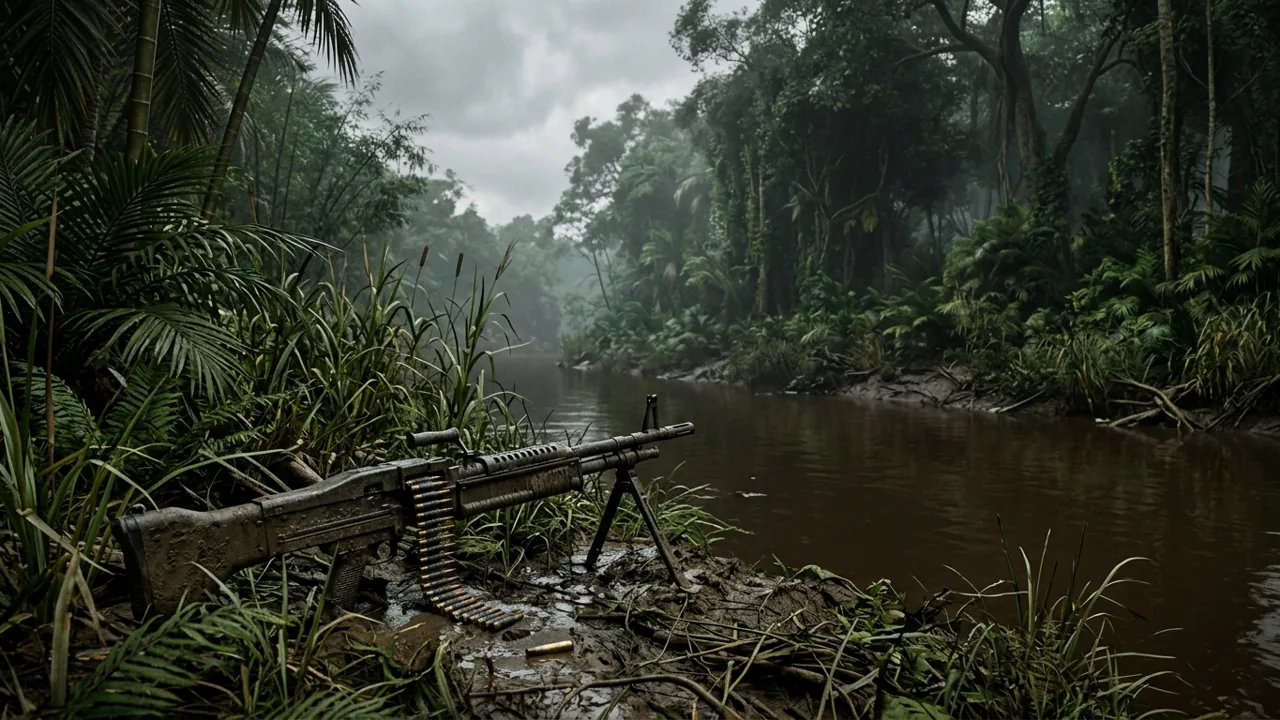
The transition from the war-torn villages of 1940s Europe to the suffocating, canopy-covered environments of the Vietnam War represents a massive leap for the tactical shooter community. With Hell Let Loose: Vietnam officially rolling out, players are finally deploying into the highly anticipated 50v50 asymmetric battles that pit the overwhelming aerial mobility of the US Armed Forces against the entrenched, guerrilla-warfare tactics of the North Vietnamese Army (NVA) and Viet Cong. While the community is widely praising the atmospheric tension and the introduction of entirely new dimensions of warfare—such as helicopter assaults and complex tunnel networks—veteran players are starting to heavily dissect the granular changes to infantry movement and gunplay.
Developed by Expression Games and published by Team17, this standalone title running on Unreal Engine 5 brings a host of under-the-hood adjustments. However, not all mechanical changes are being met with universal applause. Over the past 24 hours, significant discussions have erupted across community forums regarding a few highly debated gameplay alterations—specifically concerning how water traversal is handled and a heavily restricted new approach to deploying heavy machine guns. Additionally, console players on the Xbox Series X and Series S are reporting noticeable graphical disparities alongside a suite of severe input bugs that are currently stalling armor and air operations.
Here is a detailed breakdown of the community feedback surrounding these mechanical shifts, and what they mean for the overarching meta of the 1960s conflict.
The Tactical Implications of Sprint-Swimming
One of the most defining geographical features of the Southeast Asian theater is the abundance of water. From flooded rice paddies to the wide, muddy expanses of the Mekong Delta, water obstacles historically dictated troop movements, patrol routes, and combat engagements. In the context of a hardcore tactical shooter, rivers and canals are traditionally utilized as natural chokepoints, forcing attacking squads to carefully coordinate smoke artillery and suppressing fire before attempting a slow, vulnerable crossing.
However, community reports indicate that the newly implemented swimming mechanics in Hell Let Loose: Vietnam are severely undermining this tactical pillar. According to extensive player feedback, soldiers jumping into deep water are reportedly able to swim across muddy rivers at near full running speed. This fast-paced aquatic traversal feels highly uncharacteristic for a game attempting to simulate the grueling reality of moving while weighed down by combat webbing, 1960s-era weapons, and heavy ammunition.
For veterans coming from the original World War II title, this is a jarring departure. In the predecessor, players could not actively swim; they were forced to wade through shallow water crossings at an agonizingly slow pace. That deliberate design choice made maps with rivers notoriously difficult to push, transforming them into highly strategic defensive lines. In the current iteration of the Vietnam title, the ability to simply dive into a river and sprint-swim to the opposite bank allegedly turns major waterways into mere visual decorations rather than actual terrain obstacles.
This reported mechanic has profound ripple effects on how defenders must secure a perimeter. If an entire US or NVA squad can rapidly swim across a flank without severe movement penalties, holding the line becomes exponentially more difficult. It effectively nullifies the defensive advantage of natural moats, forcing commanders to expend valuable resources and manpower to watch riverbanks that should, in theory, be natural death traps. Whether Expression Games intended this rapid swimming to accelerate the overall pacing, or if it is merely an oversight in the Unreal Engine 5 movement logic, remains unconfirmed. Regardless, the community is highly vocal in requesting a reversion to the slow, punishing wading mechanics of the past to preserve tactical realism.
Machine Gun Deployments: A Loss of Situational Awareness
The machine gunner role is a cornerstone of defensive strategies and offensive suppression. Whether laying down covering fire for an advancing infantry element or defending a firebase against a coordinated assault, the machine gun dictates the flow of the frontline. In Hell Let Loose: Vietnam, however, a reported change to how these heavy weapons handle when deployed on a bipod has sparked significant frustration among dedicated support players.
Players are noting that once a machine gun is mounted on a windowsill, sandbag, or muddy embankment, the camera is forcibly locked into the Aim Down Sights (ADS) perspective. This completely removes the free-look capability that was a staple in the previous game. In the WWII original, a deployed machine gunner could sit back slightly from their iron sights, allowing them to scan their peripheral vision for flanking enemies, monitor their squad’s positioning, and quickly identify distant targets before committing to a zoomed-in firing stance.
Being forcibly locked into ADS severely tunnels the player’s vision, turning an essential defensive role into a highly vulnerable position. The dense jungles, thick fog, and tall elephant grass of the new maps already make target acquisition incredibly difficult. Stripping the gunner of their situational awareness reportedly makes them feel like a static, easily flanked target rather than a formidable defensive anchor. In a game where communication and environmental awareness are paramount, this restricted field of view forces machine gunners to constantly deploy and undeploy their weapons just to check their immediate surroundings, dangerously slowing down their reaction times during chaotic firefights.
Coupled with the recent confirmation regarding the removal of booby traps for the NVA faction, these restrictive deployment mechanics make holding a defensive perimeter noticeably more difficult for static infantry.
The Console Frontline: Xbox Series X|S Performance Disparities
While PC players continue to dissect the core mechanics, the console community is facing its own unique set of challenges. Built from the ground up on Unreal Engine 5, the game attempts to push the boundaries of visual fidelity with dense foliage rendering, complex lighting for jungle canopies, and intricate atmospheric effects like napalm explosions and dynamic weather.
Recent technical comparisons circulating in the community have highlighted a noticeable gap in visual quality between the Xbox Series X and its less powerful counterpart, the Xbox Series S. The Series X, designed to handle higher resolutions and heavier graphical loads, manages to maintain a relatively stable and immersive presentation of the dense jungle environments. However, players deploying on the Series S are reportedly experiencing significant graphical compromises. These community-reported issues include blurry ground textures, aggressive dynamic resolution scaling, and severe pop-in regarding vegetation and vital cover elements.
These visual disparities are not just aesthetic complaints; they carry genuine gameplay ramifications. In a tactical shooter where spotting a camouflage-clad NVA soldier in the brush is a matter of life and death, blurry graphics and low-resolution textures put Series S players at a distinct competitive disadvantage. The inability to clearly distinguish enemy silhouettes from environmental clutter makes long-range rifle engagements incredibly frustrating, leading to an outcry for better optimization profiles tailored specifically for the lower-end console hardware.
Critical Bugs: Immobilized Vehicles and Input Anomalies
Compounding the graphical hardware issues on Xbox are a series of severe, reportedly game-breaking bugs directly impacting mobility and input accuracy. One of the most alarming reports involves players spawning into vehicles—specifically heavy armor and the newly introduced UH-1 Huey helicopters—and finding themselves completely immobilized.
According to multiple player accounts, an Xbox-specific bug allows users to successfully enter the driver or pilot seats and start the engine, but the vehicle completely fails to respond to directional movement inputs. Shifting into gear or attempting to throttle the helicopter rotors yields no results, leaving valuable team assets stranded in the headquarters spawn. Given that helicopters are the literal backbone of the US Armed Forces’ airmobile strategy, having them rendered useless by a persistent input bug drastically tips the scale of the asymmetric warfare in favor of the North Vietnamese ground forces.
Furthermore, a strange input anomaly mimicking controller “stick drift” is reportedly plaguing Xbox users. Players have noted that their crosshairs will slowly drift across the screen without any physical input on the right thumbstick. Crucially, players report this phenomenon occurs exclusively within Hell Let Loose: Vietnam and not in other titles, heavily suggesting it is a software issue rather than hardware degradation. This selective input glitch heavily disrupts the precise aiming required for the newly adjusted TTK and audio mechanics, leading many to suspect an error in how the game’s engine processes controller deadzones.
Looking Ahead
As the dust settles from the initial deployments into the jungle, it is clear that Expression Games has a substantial amount of community feedback to address. The shift from WWII to Vietnam was never going to be a simple asset swap, and tweaking the pacing of infantry movement, heavy weapon handling, and console optimization requires a delicate touch.
With the community heavily scrutinizing the sprint-swimming mechanics and restrictive machine gun deployments, all eyes are turned toward the upcoming August 19 content roadmap. As the development team sifts through this early telemetry and bug reports, players are hoping that the raw, uncompromising realism that defined the franchise will be quickly restored to the river crossings and firebases of the new conflict.