Hell Let Loose: Vietnam River Boats Strategy: Replacing Half-Tracks and Securing Flanks
Discover how river boats replace WWII half-tracks in Hell Let Loose: Vietnam. Learn advanced riverine warfare tactics, flanking routes, and mobile garrison deployment.
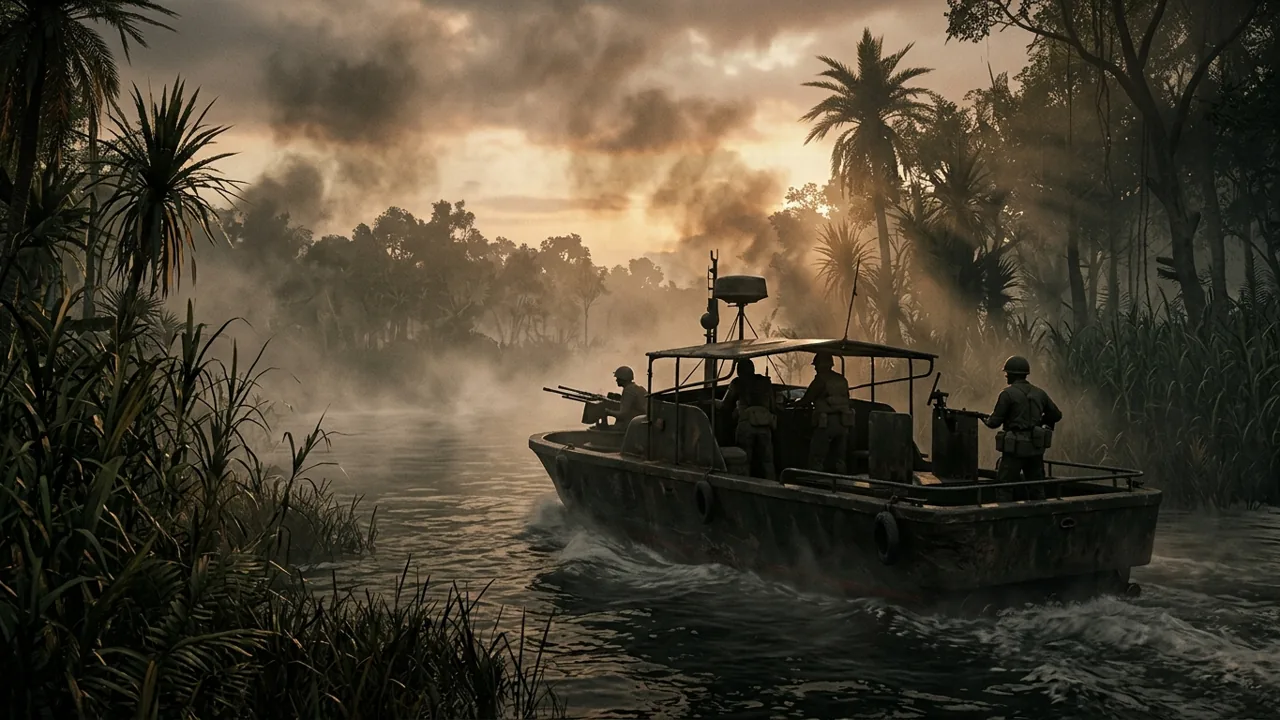
Warfare in Expression Games’ Hell Let Loose: Vietnam feels fundamentally different from its predecessor. If you spent hundreds of hours in the WWII original, you are likely accustomed to slogging through the muddy fields of Normandy or holding the line in ruined European towns. The transition to the 1965–1973 Vietnam theater strips away those familiar comforts. The dense jungles, vertical terrain, and extensive waterways demand a complete rewiring of your tactical approach.
While much of the community focus has been on the high-profile addition of Huey helicopters and the subterranean anxiety of NVA tunnel networks, another system is quietly dictating the flow of the battlefield: riverine warfare. Based on early player experiences and ongoing multiplayer skirmishes, river boats are proving to be the unsung heroes of the tactical sandbox. They completely replace the mechanical role of the WWII half-tracks, trading the slow, armored crawl of terrestrial vehicles for rapid, high-risk mobility along the deltas. For veteran players and newcomers alike, understanding how to read the waterways and leverage these vessels is no longer optional. It is the defining difference between getting bogged down in a meat grinder at the center of the map and successfully dismantling the enemy’s defensive lines from behind.
The Evolution of Mobile Spawns: Farewell Half-Tracks
In the WWII iteration of the game, half-tracks were introduced as mobile garrisons. They were heavily armored but excruciatingly slow, requiring careful placement to avoid getting stuck in trenches or blown up by a well-positioned anti-tank gun. Once parked and the engine killed, they provided a durable spawn point that could anchor a team’s offense or defense.
Hell Let Loose: Vietnam throws that terrestrial playbook out the window. According to community reports and gameplay analysis, the rugged, untamed topography of the 1960s jungle maps severely limits traditional vehicle pathing. Instead of roads, the primary arteries for flanking and logistical transport are the rivers. River boats step in to fill the void left by half-tracks, but they do so with a completely different risk-reward profile.
They are exceptionally fast, allowing a squad to traverse massive sections of the map in a fraction of the time it would take to hike through the bush. However, they are also highly vulnerable. Unlike the armored plating of a half-track, a river boat offers minimal ballistic protection. The crew is exposed, meaning a single well-hidden machine gunner on the riverbank can turn a flanking maneuver into a total disaster. This dynamic shifts the utility of the mobile spawn from a brute-force anchor to an opportunistic, hit-and-run asset.
Primary Functions of River Boats in Vietnam
If you want to contribute to the commander’s overarching strategy, you need to recognize that river boats are multi-tool assets. They are not simply meant for joyriding through the swamps.
High-Speed Troop Transport
At the start of a Warfare or Offensive match, establishing a strong frontline presence is paramount. While standard transport trucks still exist, the winding dirt paths of Vietnam maps are often predictable, heavily mined, and easily ambushed. River boats provide a superior alternative route to the mid-cap points. Early match river boat rushes are reportedly defining the current meta, allowing a full squad to bypass the central firefights and establish a foothold right on the edge of the active sector. The sheer speed of the vessel means you can often beat the enemy infantry to crucial chokepoints, setting up your own defensive lines rather than walking into theirs.
Tactical Supply Drops
Logistics win wars, and in Hell Let Loose, supplies are the lifeblood of your team’s infrastructure. River boats carry their own internal supply cache, allowing you to drop crates directly along the shoreline. This is a massive upgrade in logistical flexibility. Instead of relying purely on a highly visible air drop—which acts as a giant flare telling the enemy exactly where your team is setting up—a river boat can silently cruise up a tributary, drop supplies, and leave. Your squad’s Officer or Engineer can then use those supplies to build defensive nodes or establish a forward garrison deep in hostile territory, completely under the radar.
The Mobile River Garrison
Just like the half-tracks they replace, river boats function as mobile team-wide spawn points. Once the vehicle is brought to a complete halt and the engine is cut, the spawn is activated. The strategic implications of this are immense. You can park a boat in a heavily vegetated inlet, cut the motor, and suddenly your entire team has a viable spawn vector behind enemy lines. If the enemy discovers the location, you do not have to rebuild the spawn from scratch; a dedicated driver can simply start the engine and relocate the boat to the next bend in the river, keeping the opposing team constantly guessing.
Advanced Flanking Strategies
The asymmetrical nature of Hell Let Loose: Vietnam means the US forces and the NVA/VC factions play completely different games. The North Vietnamese factions rely heavily on their tunnel networks to move unseen beneath the earth. For the US forces, the waterways offer a dynamic counter-balance to this subterranean dominance.
Bypassing Jungle Chokepoints
The maps in the Vietnam release are characterized by dense foliage, steep ravines, and narrow footpaths. These natural chokepoints are a dream for defenders. Pushing an entire team through a jungle valley is often an exercise in futility, bleeding tickets as players fall victim to unseen snipers and ambushes. The river boat allows a squad lead to look at the tactical map, identify the river systems that wrap around these fortified positions, and navigate around the primary kill zones. By deploying troops behind the enemy’s strongpoint, you force them to turn their guns away from the frontline, instantly relieving pressure on the rest of your team.
The Early Match River Rush
As noted by veterans in the community forums, the opening minutes of a match are critical. A coordinated squad that claims a river boat at HQ and immediately throttles up the main waterway can dictate the entire first phase of the game. The strategy involves racing to the furthest viable drop-off point behind the neutral sector, dropping supplies, and instantly building a standard garrison before the enemy commander can even get their bearings. This early aggression often catches the opposing team flat-footed, stuck in their transport trucks miles away from the objective.
Integrating Riverine Warfare with Your Squad
Operating a river boat effectively requires discipline. A boat loaded with disorganized players is nothing more than a floating target. To maximize its utility, specific roles must coordinate their efforts.
Recommended Roles for Boat Crews
The Officer is naturally the most important passenger, dictating the route and communicating with the Commander regarding where the mobile spawn is needed most. However, the Support and Engineer roles are equally critical. While the boat can drop its own supplies, having a Support player onboard guarantees that even if the boat’s supplies are exhausted, you can still establish an emergency garrison. The Engineer is vital for instantly putting down barbed wire, barricades, or resource nodes near the beachhead, fortifying the landing zone against the inevitable counter-attack.
Coordinating with Commander Assets
While Helicopter Air Assault grabs the cinematic glory and dominates the skyline, river boats often do the quiet, dirty work that actually wins the match. Commanders should use helicopters as a distraction or a rapid reaction force, drawing enemy eyes to the sky, while simultaneously directing a river boat to slip down the flank unnoticed. This dual-threat approach overwhelms the enemy’s situational awareness. Furthermore, if a river boat establishes a solid beachhead, the Commander can call in a recon plane over the adjacent jungle, feeding real-time enemy positions to the disembarking infantry.
Surviving the River: Threats and Countermeasures
For all their advantages, river boats are essentially glass cannons of mobility. The moment you leave the safety of the HQ sector, you are vulnerable from all sides.
The Danger of Riverbank Ambushes
The NVA forces excel at guerilla tactics. A common and highly effective strategy for the opposing team is to position a machine gunner and an anti-tank role overlooking the narrowest stretches of the river. When a fully loaded boat passes through, the ambush is sprung. RPGs can obliterate the vessel in a single hit, wiping out a full squad and destroying the mobile spawn capability instantly. Even small arms fire is lethal to the exposed crew. The helmsman is an especially prime target; if the driver is killed, the boat drifts aimlessly, leaving the surviving passengers as sitting ducks.
Evasion and Concealment Tactics
To mitigate these risks, boat drivers must master the environment. Do not sail straight down the middle of wide rivers where you are visible for miles. Hug the banks, utilizing the overarching tree canopy and tall reeds to break line of sight. Pay attention to the dynamic weather systems—if a thick fog or rainstorm rolls in, that is your cue to make aggressive pushes deep into enemy territory. When coming to a stop to establish a spawn, never anchor in plain view. Look for submerged mangroves, narrow inlets, or overhanging cliffs that hide the boat’s silhouette from the main waterway.
Conclusion: Adapting to the New Frontier
Hell Let Loose: Vietnam is forcing the playerbase to unlearn years of WWII habits. The static, predictable frontlines are gone, replaced by a porous, 360-degree battlefield where threats emerge from the sky, the tunnels beneath your feet, and the rivers cutting through the jungle.
The community is already recognizing that mastering river boats is just as critical as learning the recoil patterns of the new 1960s arsenal or understanding the intricacies of the Factions Guide. They are the ultimate tool for breaking stalemates, delivering precise logistical support, and ensuring your team always has a viable angle of attack. As the meta continues to settle and players become more ruthless in their defensive setups, the teams that coordinate their riverine operations will consistently outmaneuver and dismantle their opponents. If you are still relying on walking through the jungle to get to the objective, you are already falling behind. Get to the docks, rev the engines, and take control of the waterways.