Hell Let Loose: Vietnam Patch 1.2, Cam Ranh Port Teasers, and FPS Games Show Details
Expression Games teases Cam Ranh Port weapon shipments and Patch 1.2 alongside Hell Let Loose: Vietnam's upcoming showcase at the September FPS Games Show.
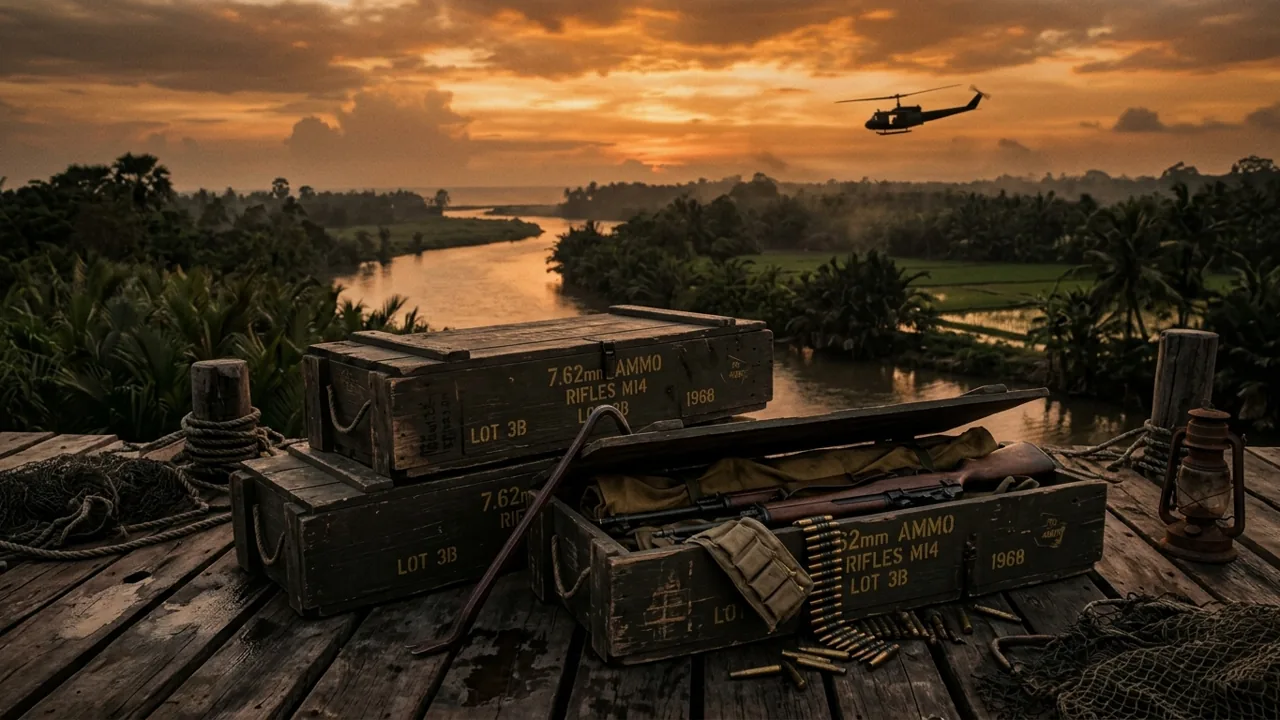
Following the rapid deployment of Hotfix 1 to stabilize server infrastructure, the community has been eagerly waiting for a clear view of the future. Expression Games and Team17 have adjusted their communication schedule, pushing the highly anticipated content roadmap to later this week while confirming that Patch 1.2 will deploy simultaneously.
Alongside these timing adjustments, the developers have dropped intriguing lore teasers regarding a weapons shipment at Cam Ranh Port, and the publisher has confirmed the game’s participation in a massive upcoming industry event. However, as the 50v50 tactical shooter continues through its launch window, critical technical issues—specifically regarding cross-platform VoIP communications and Unreal Engine 5 console graphics—are demanding immediate developer attention.
Here is a complete breakdown of the official updates, the teased content, and the shifting community meta.
Patch 1.2 and the Shifted Post-Launch Roadmap
The developers initially planned to reveal the full post-launch roadmap early this week. However, an official statement posted to the community subreddits confirmed that the briefing has been pushed back to later in the week while final preparations are made. This delay is reportedly due to the development team needing additional time to analyze telemetry data and prioritize specific fixes following the massive influx of players at launch.
While the roadmap timeline has shifted, players will not have to wait long for technical improvements. Expression Games confirmed that Patch 1.2 will deploy this week. While Hotfix 1 was purely a stabilization pass aimed at preventing server crashes, Patch 1.2 is expected to carry a larger payload of gameplay tuning, collision fixes for the dense jungle environments, and highly requested optimizations for both PC and console platforms. The rapid cadence of these updates highlights the studio’s commitment to maintaining a stable environment for a game that heavily relies on synchronized large-scale teamwork.
Cam Ranh Port Intel: Speculating the Next Arsenal
Accompanying the news of the Patch 1.2 deployment, the developers injected a narrative teaser into their communications. The team stated they had “intercepted some interesting intel” regarding a “new shipment of weapons” that has reportedly landed at Cam Ranh Port, asking the community what they think the cargo might hold.
Historically, Cam Ranh Bay was one of the most critical deep-water ports and major logistics hubs for the United States military during the Vietnam War. It served as a primary entry point for infantry battalions, heavy machinery, helicopters, and vast quantities of munitions. By referencing this specific location, the developers are firmly grounding their upcoming content drops in historical military logistics.
The community is actively speculating on what this shipment entails. The current US faction arsenal is defined by the M16A1 assault rifle, the M14 battle rifle, and the M60 machine gun. The North Vietnamese Army (NVA) and Viet Cong (VC) forces currently counter with the Type 56 and the unique Dillon AK47.
Players strongly expect the introduction of specialized weaponry designed to alter the pacing of close-quarters engagements. Prominent community requests include the M79 grenade launcher (affectionately known as the “Thumper”), which would allow US forces to clear out entrenched NVA fighting positions from a distance. Another highly requested weapon is the Ithaca 37 pump-action shotgun, which would be devastatingly effective when US forces are forced to clear the intricate and claustrophobic NVA tunnel networks.
Furthermore, the mention of Cam Ranh Port has sparked rumors that a new map based on a coastal logistics facility might be in development. Fighting through massive supply depots, docked cargo ships, and fortified concrete bunkers would offer a starkly different tactical geometry compared to the six rural jungle and river delta maps currently available.
The FPS Games Show: September 3 Showcase
Looking slightly further ahead, Hell Let Loose: Vietnam is officially confirmed to be part of the inaugural FPS Games Show. Scheduled to broadcast live on Twitch on September 3, 2026, this collaborative event is a dedicated showcase entirely focused on first-person shooters, operating independently of massive mainstream trade shows and without paid marketing placements.
Expression Games will share the stage with a formidable lineup of tactical and extraction shooters, including Escape from Tarkov, Ready or Not, Gray Zone Warfare, and Squad-competitor 83. Participating in this specific lineup underscores Team17’s ambition to position Hell Let Loose: Vietnam squarely within the hardcore military simulation market.
Fans should expect a substantial reveal during this showcase. With the game now publicly available, the presentation will likely look beyond immediate bug fixes and focus on long-term roadmap deliverables. We can expect developers to detail upcoming content blocks, potentially showcasing the promised armor gameplay integrations, expansions to the UH-1 Huey flight models, or even revealing the first glimpses of future operational theaters like the urban combat environments of the Battle of Huế.
Critical VoIP Bugs and PS5 Visual Fidelity
While the upcoming content looks promising, the immediate reality for many players involves frustrating technical hurdles. A hardcore tactical shooter relying on chain-of-command communication lives and dies by its Voice over IP (VoIP) systems. Unfortunately, a significant portion of the player base is currently experiencing severe microphone malfunctions.
Reports have flooded community channels regarding specific hardware and platform conflicts. On the PlayStation 5, users utilizing SteelSeries headsets (such as the Arctis Nova 5P) are finding that their microphone indicators light up continuously in Proximity or Unit Radio channels, yet absolutely no audio is transmitted to teammates. This issue persists even when the microphone is physically muted on the headset or the DualSense controller.
Similar voice chat dropouts are being heavily reported by users playing via GeForce NOW. Players note that following Hotfix 1, microphone inputs are seemingly failing to pass through the cloud service’s steam overlay to the game servers. When Squad Leaders cannot coordinate artillery strikes with the Commander, or infantry cannot warn their medics of an approaching NVA ambush, the core loop of the game degrades entirely. The community is pressing Expression Games to prioritize backend API fixes for the Vivox voice service in Patch 1.2 to restore these critical comms.
In addition to audio bugs, console visual fidelity remains a hot topic of debate. Despite the PC performance issues largely stabilizing for high-end rigs, PS5 players are actively reporting that the jungle foliage appears excessively blurry. Unreal Engine 5 is notoriously demanding, particularly when rendering the overlapping geometry of dense tropical canopies using Nanite and Lumen. It is highly likely that the console versions are utilizing aggressive dynamic resolution scaling combined with Temporal Anti-Aliasing (TAA) to maintain a playable framerate. This combination causes the edges of the foliage to smear during movement, making it incredibly difficult to spot camouflaged Viet Cong fighters. Console players are urgently requesting options to disable TAA, adjust sharpening filters, or the introduction of a locked 30fps “Quality” mode to prioritize visual clarity over frame rate.
Player-Driven Meta: Stealth Riverboats and Ambient Voice Lines
Beyond waiting for official updates, the community is organically evolving the battlefield meta. A prominent strategy rapidly gaining traction involves the advanced use of the riverboat strategy.
In the World War II iteration of Hell Let Loose, Commanders heavily relied on the “Airhead” ability to parachute temporary spawn points behind enemy lines. In the Vietnam setting, this mechanic has been completely removed to emphasize historical accuracy and ground-level logistics. While US helicopters provide rapid transport, their massive acoustic footprint immediately alerts the NVA to an incoming assault.
To execute covert flanks, veteran squads are turning to the waterways. By driving a patrol boat upriver and manually shutting off the engine before approaching the target sector, squads can drift silently into the riverbanks. Once disembarked, the Officer can place a concealed Outpost (OP) or coordinate with the Commander for a supply drop to construct a Garrison. This essentially turns the riverboat into a highly effective, silent insertion vehicle—the spiritual successor to the Airhead. The NVA faction is already adapting to this meta, tasking their Engineers with constructing defensive tunnel networks and heavy anti-air emplacements specifically overlooking strategic river bends to deny these amphibious flanks.
As players master these deep mechanics, they are also voicing requests for quality-of-life features that enhance immersion. A highly discussed community suggestion asks for the implementation of automated soldier voice lines, akin to the systems utilized in the Battlefield franchise. Currently, the game relies entirely on player-driven VoIP for callouts. The addition of localized, automated audio cues—such as US soldiers yelling “reloading” or NVA forces shouting tactical commands when throwing smoke or providing suppressive fire—would significantly elevate the atmospheric tension. Furthermore, this system would provide critical auditory feedback for players who are impacted by the ongoing VoIP bugs, ensuring that some level of tactical awareness is maintained even when microphones fail.
As we approach the release of Patch 1.2 and the highly anticipated roadmap reveal, the foundation of Hell Let Loose: Vietnam is solidifying. The upcoming weeks will prove critical for Expression Games as they balance bug squashing with the delivery of fresh, asymmetrical warfare content.