How to Destroy Armor in Hell Let Loose: Vietnam and Developer AMA #1 Recap
Master anti-tank tactics with the latest community armor data and discover key insights on vehicle mechanics from Expression Games' Developer AMA #1.
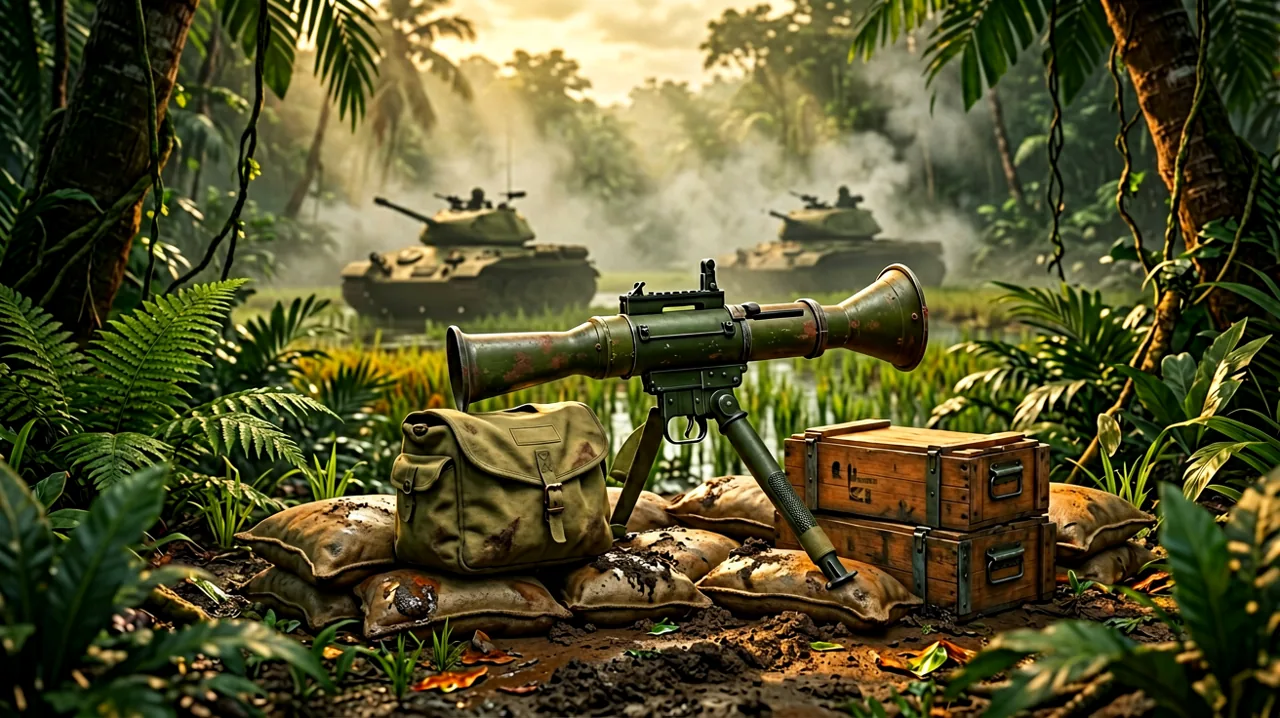
The battlefields of Hell Let Loose: Vietnam present a massive paradigm shift from the open fields of Normandy and the snowy trenches of Foy. Expression Games has traded the slow, methodical armor pushes of World War II for chaotic, asymmetric warfare set against the dense jungles and river deltas of Southeast Asia. With the recent release of Patch 1.3 and a wealth of new information dropping from the highly anticipated Developer AMA #1, the community finally has a much clearer picture of how armored warfare functions in this punishing new environment.
Alongside official developer updates, competitive community members have stepped up, launching a dedicated Tank Data Site to crunch the raw numbers on armor penetration, deflection angles, and component health. Whether you are stepping into the Commander seat of heavily armored US machinery or crawling through the underbrush as an NVA Anti-Tank soldier with a rocket launcher, understanding these entirely overhauled vehicle mechanics is mandatory for survival.
Developer AMA #1: Addressing the Community and Vehicle Physics
Following the deployment of Patch 1.3, which introduced significant balancing to the NVA subterranean networks, Expression Games held their first major post-launch livestream AMA. The developers took the opportunity to answer pressing questions sourced directly from the Reddit community and address the current state of the game following its massive launch window.
One of the core topics of the AMA was vehicle traversal and physics. Veterans who have driven tanks in the original Hell Let Loose remember the frustration of getting stuck on seemingly insignificant wooden fences or trench lines. The developers acknowledged that the transition to Unreal Engine 5 for the Vietnam setting has allowed them to refine collision meshes, particularly around the complex root systems, thick mud, and rocky outcrops of dense maps like Quảng Ngãi.
While the AMA VOD highlighted that armor remains a highly lethal force multiplier, the development team emphasized that tanks are no longer the undisputed apex predators of the battlefield. The introduction of UH-1 Huey helicopters for rapid US air assaults and the intricate tunnel networks utilized by the Viet Cong mean that armor crews are more vulnerable to sudden, multi-axis ambushes than ever before. A tank operating without dedicated infantry support in the thick vegetation is simply a steel coffin waiting for a satchel charge.
The team also touched on performance optimizations, noting that Patch 1.3 and the accompanying Community Update 2 laid the groundwork for smoother framerates when multiple heavy vehicles and helicopters are rendering simultaneously in dense foliage. They confirmed that further tweaks to vehicle pathing and hit-registration for high-explosive (HE) rounds are slated for upcoming hotfixes.
Eurogamer Review Insights and the Tactical Meta
Mainstream gaming outlets are heavily weighing in on the game’s launch state and its updated mechanics. The recent review published by Eurogamer praises the intense, asymmetric design that fundamentally separates the Vietnam iteration from its WWII predecessor. However, the review correctly points out that armor gameplay feels drastically different, often bordering on claustrophobic.
In the European theater, tankers enjoyed long sightlines across agricultural fields to spot enemy armor at a distance. In the 1960s Southeast Asian theater, visibility is severely handicapped by the towering jungle canopy, thick elephant grass, and dynamic weather systems like monsoon rains. Eurogamer identifies that the new meta relies entirely on constant communication between the tank commander’s periscope and the spotters on the ground. You simply cannot push a heavy vehicle into a rubber plantation without infantry clearing the flanks first. The developers echoed this exact sentiment during their AMA, reinforcing that the game is intentionally designed to punish lone-wolf vehicle squads and reward combined-arms tactics.
The Community Tank Data Site: Penetration and Deflection Mechanics
While the developers provided the overarching design philosophy during the AMA, the hardcore player base has provided the raw numbers. Thanks to dedicated community members like Raz_Bora, a comprehensive “Hell Let Loose WWII & Vietnam Tank Data Site” is now live, offering invaluable metrics on how to efficiently destroy enemy armor in the current build.
The core mechanics of armor penetration remain somewhat familiar to series veterans, but the specific weak points and deflection values have been completely reworked for the 1960s arsenal. Armor is divided into varying thickness categories, and the angle of your projectile’s impact dictates whether you secure a kill or merely dent the paintwork.
For infantry Anti-Tank roles, firing a rocket directly into the thick frontal glacis of a main battle tank is a waste of limited munitions. The community data confirms that the rear engine deck remains the most universally vulnerable structural point for all tracked vehicles. Hitting this zone not only guarantees maximum hull damage but also frequently destroys the engine component, leaving the vehicle stranded and unable to traverse its turret fast enough to engage the flanking attackers.
Track hits are equally critical in the current meta. In the tight, restrictive lanes of the jungle, a tracked vehicle blocking a narrow dirt road creates a severe logistical bottleneck for the opposing team’s supply lines. A well-placed rocket to the suspension or drive sprocket will completely immobilize the tank, forcing the crew to either attempt a highly risky field repair under sniper fire or abandon the vehicle to the jungle.
US vs. NVA: Asymmetric Anti-Tank Tactics
The defining feature of the 1960s setting is the stark contrast in faction capabilities. US forces rely heavily on mechanized superiority, heavy firepower, and air mobility, while the North Vietnamese Army (NVA) and Viet Cong (VC) utilize guerrilla tactics, traps, and superior terrain knowledge to level the playing field.
Playing as the US Anti-Tank Infantry
US forces typically operate with access to advanced, portable anti-armor weapons. Expected loadouts heavily feature systems like the M72 LAW and heavier recoilless rifles capable of punching through light steel. The key to surviving as a US AT soldier is utilizing the heavy suppressing fire from your squad’s machine gunner to safely flank enemy armor.
The NVA’s armored presence reportedly leans heavily on light, amphibious tanks designed to maintain buoyancy in the extensive river networks. The community data site indicates that these specific vehicles lack the thick sloped armor of their American counterparts and can be reliably penetrated from the sides, rather than just the rear. Do not hesitate to take side shots if the angle is flat (perpendicular to the hull) to avoid frustrating ricochets. When fighting near riverbanks, catching an amphibious tank as it transitions from water to land is the ideal moment to strike, as their mobility is severely hampered during this phase.
Playing as the NVA/VC Anti-Tank Infantry
For the communist forces, taking down heavily armored US behemoths requires immense patience and total mastery of the map systems. The tunnel network is the ultimate equalizer. A standard, highly effective tactic emerging from the Beta and Launch phases involves using a concealed tunnel exit to pop up directly behind a slow-moving US armored column.
Armed with iconic, rugged weaponry like the RPG-2 or RPG-7 (expected as standard issue), the NVA anti-tank soldier must strike with precision and immediately disappear back into the foliage. Because US heavy tanks possess superior frontal armor that will easily shrug off a glancing hit, ambushes must be tightly coordinated with your squad.
The community data suggests that satchel charges remain a guaranteed kill on any stationary vehicle, provided you can survive the harrowing sprint to plant the explosive. Dropping a satchel on the engine deck of an immobilized tank is still the most cost-effective way to permanently remove it from the tactical board.
Tank vs. Tank Combat: The Jungle Duel
When US armor directly encounters NVA armor, the engagement rules change drastically compared to infantry encounters. Tank vs. tank battles in the jungle are high-stakes, terrifying games of hide-and-seek. Because sightlines are persistently blocked by trees and sharp elevation changes, you rarely experience the long-distance artillery duels seen on older maps like Kursk or El Alamein.
Instead, engagements happen at point-blank range, often around the blind corners of muddy logging roads. The Tank Data Site strongly stresses the importance of loading Armor-Piercing (AP) rounds proactively when traversing high-risk sectors. If you round a corner with High-Explosive (HE) loaded, you will likely bounce your first shot off the enemy armor, granting them the vital seconds needed to load AP and send a round straight through your turret ring.
Communication between the driver and the gunner is paramount. The driver must continuously maneuver to maintain an angle that maximizes the sloped armor of the hull, while the gunner must identify and strike specific weak points—such as the turret cheeks or the lower front plate if the enemy vehicle is exposing its underbelly while cresting a hill.
The Road Ahead
As Expression Games continues to parse massive amounts of feedback from the Developer AMA and the active player base, it is evident that armored combat in Hell Let Loose: Vietnam will continue to iterate and evolve. The developers have shown a clear willingness to adjust traversal physics, tweak damage models, and fix collision bugs based on hardcore community testing.
Until the next major balance pass arrives, studying the specific penetration angles from the community data site, coordinating with your infantry escorts, and heavily utilizing the terrain will be the difference between dominating a sector and leaving a smoking, abandoned chassis rusting in the jungle.