Mastering the Commander Role in Warfare Mode for Hell Let Loose: Vietnam
Learn how to dominate Warfare mode as a Commander in Hell Let Loose: Vietnam. Discover tips on tactical map control, asymmetrical strategies, and squad coordination.
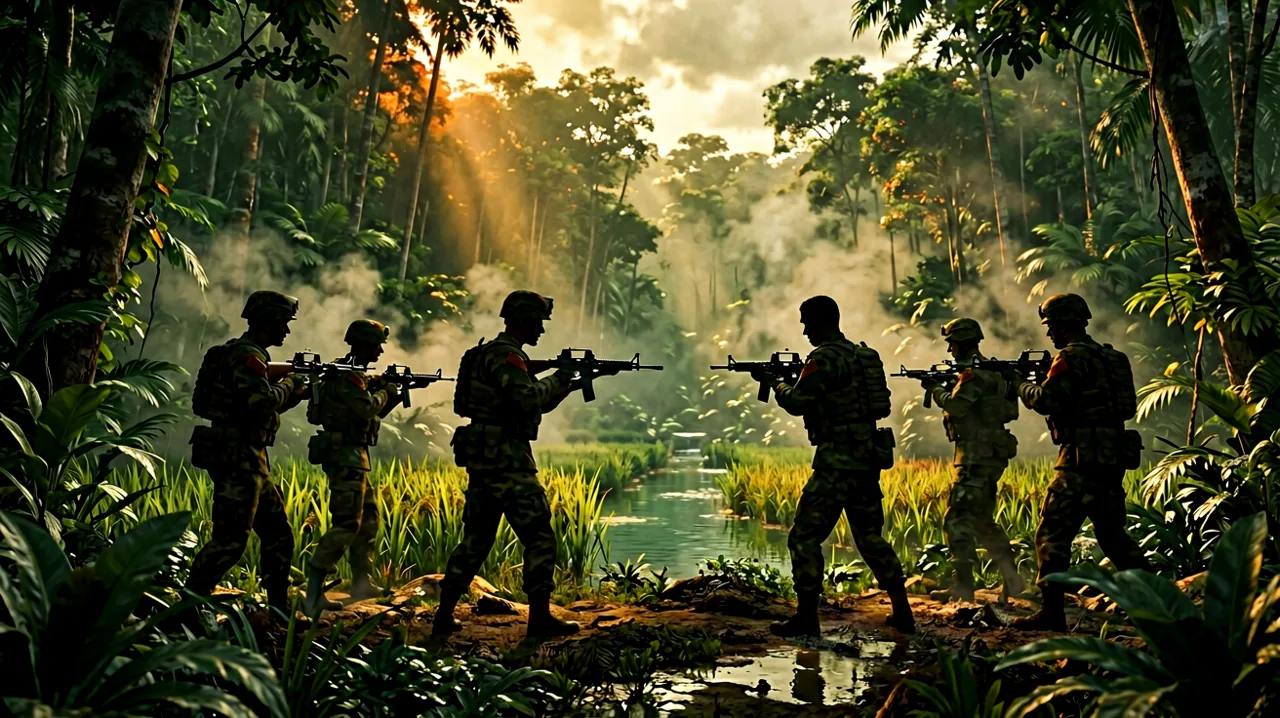
The transition from the war-torn battlefields of World War II to the dense, unforgiving jungles of Southeast Asia brings a wealth of new strategic challenges for players in Expression Games’ highly anticipated title. Set to release on August 13, 2026, the game is currently generating intense discussions among the community following massive playtests. If you are stepping into the Commander role, the pressure is immense. You are no longer just responsible for your own rifle and a single squad; you are the architect of a 50-player war machine.
Based on insights recently shared by thousand-hour veterans on community forums, succeeding as a Commander in Warfare mode requires a fundamental shift in how you perceive the tactical map, manage your subordinate squad leaders, and utilize the expected asymmetrical mechanics of this specific era.
The Philosophy of Tactical Map Control
Veterans of the franchise frequently emphasize one core philosophy that remains undeniably true regardless of the historical setting: Warfare mode is not about chasing kills or achieving a high personal score. It is entirely about tactical map control. The team that successfully dominates the map inherently wins the match. As a Commander, your primary objective is to paint the tactical map with friendly zones, secure critical chokepoints, and deny the enemy any safe approach to the active sectors.
Unlike the original game, where map control often meant holding linear hedgerows, open fields, and ruined European towns, the Vietnam setting introduces dramatic verticality and complex subterranean threats. Map control here means keeping a watchful eye on the canopy for incoming US aerial assaults while sweeping the dense undergrowth for concealed North Vietnamese Army (NVA) tunnel networks. When you open your map, you should not just see blue and red dots; you need to visualize the entire flow of the battle, anticipate where the enemy will push next, and position your forces to intercept them before they even reach the capture point. Good commanders do not merely react to the enemy; they force the enemy to react to them.
Essential Commander Duties in the Vietnam Era
A Commander’s responsibilities extend far beyond simply clicking icons on a map interface. You are the logistical backbone of your entire team. According to top-tier players, anticipating the enemy is your most crucial and difficult skill to master. You need to constantly ask yourself where the enemy commander is likely placing their forward spawn points. If your team is committing heavily to attacking the center point, a competent enemy commander is already setting up flanking locations or tunnels to launch a devastating counter-attack directly into your rear sectors.
Delivering required supplies and vehicles is another critical duty that dictates the pace of the game. You must ensure that your squad leaders have the materials they need to build defensive structures and backup spawn locations. The resource node system—which dictates your available manpower, munitions, and fuel—is expected to return as a core mechanic. You will need to actively coordinate with engineers to ensure these nodes are built early in the match and protected throughout the engagement. Without resources, your ability to call in crucial fire support or deploy heavy armor will be severely crippled. Utilizing your specific abilities effectively—whether that involves calling in a devastating artillery barrage, a massive napalm strike, or an emergency aerial supply drop—can single-handedly break an enemy stalemate or completely halt a massive infantry push.
Asymmetrical Warfare: US Air Mobility vs. NVA Tunnels
What truly separates commanding in this upcoming title from its predecessor is the intense, heavily promoted faction asymmetry. You absolutely cannot command the United States military the exact same way you command the North Vietnamese Army.
When playing as the US Commander, your overarching strategy revolves around overwhelming firepower and rapid air mobility. You are expected to manage helicopter air assault operations, designating safe landing zones (LZs) for Huey transport helicopters. Your ability to orchestrate airborne deployments allows for highly dynamic flanking maneuvers that can bypass ground choke points entirely. However, helicopters are loud, highly visible, and incredibly vulnerable to ground fire. This means you must carefully coordinate with recon squads to clear prospective LZs before sending in a vulnerable transport full of your infantry.
Conversely, leading the NVA requires mastering guerrilla tactics, patience, and stealth. NVA Commanders will rely heavily on the new subterranean systems. Rather than calling in loud aerial supply drops that give away your position, you will likely need to coordinate ground-level logistics to build robust, hidden spawn networks. Your goal is to make the jungle itself a weapon, surrounding US forces before they even realize what is happening. Understanding the nuances of mid-air spawns and tunnel animations will be paramount to exploiting your faction’s unique asymmetrical strengths.
Integrating Armor and Reconnaissance into Your Strategy
In addition to managing the bulk of your infantry squads, a successful Commander must perfectly integrate armor and reconnaissance into the broader battle plan. Tank squads represent your heaviest mobile firepower and are a massive drain on your precious fuel resources. You simply cannot afford to throw them away on reckless frontal assaults into areas swarming with enemy anti-tank infantry. A skilled Commander will actively coordinate with infantry squad leaders to screen the flanks of advancing tanks, protecting them from hidden ambushes in the thick vegetation.
Similarly, Recon squads act as your eyes and ears on the battlefield. While standard infantry pushes the main objective, Recon should be deployed far behind enemy lines. Their primary job is not to rack up kills, but to locate enemy logistical hubs, dismantle backup garrisons, and report on the movement of enemy armor. When a Recon squad identifies a high-value target, they relay that to you, and you can then utilize your Commander abilities to neutralize the threat before it ever impacts the front line. The synergy between a Commander who listens and a Recon squad that reports accurately is often the deciding factor in close, hard-fought matches.
Communication and the Impact of Recent Patches
A Commander is entirely blind and deaf without their squad leaders. Whether it is a recon squad operating deep behind enemy lines calling out troop movements, or a defensive squad holding down the blue zone to allow the rest of the team to advance, every unit needs to be communicating constantly. This is why having a functional microphone is universally considered mandatory for the Commander role. It is simply impossible to lead 49 other players effectively using only text chat.
Fortunately, Expression Games has been actively addressing communication hurdles during the testing phase. The recently deployed Patch 1.4 brought massive, vital improvements to the teamwork experience. By fixing severely distorted proximity chat issues and resolving visual bugs with persistent recon and flare markers, the developers have ensured that intelligence flows smoothly from the front lines directly back to the Commander’s map. Accurate map markers are the lifeblood of your decision-making process. When a squad leader spots an enemy tank or a large cluster of infantry, that information must be relayed cleanly so you can allocate the appropriate response—be it deploying an armor squad or calling in an anti-tank strafing run.
The Psychological Burden of Command
It is also important to address the psychological aspect of playing the Commander role. You will undoubtedly face matches where your team is losing ground rapidly, morale is dropping, and squad leaders are arguing over the command radio channel. In these stressful moments, remaining calm, decisive, and authoritative is essential. You must project confidence and provide clear, concise orders. If multiple squad leaders are talking over each other in a panic, you must step in and manage the communication flow to keep the channel clear for critical intelligence. A good Commander acts as a mediator and a master strategist simultaneously.
Furthermore, do not be afraid to delegate tasks. You cannot micro-manage all 49 players on the server. Trust your squad leaders to handle the tactical execution of your broader strategic goals. If you order a squad to defend a specific sector, leave the micro-positioning of their machine gunners and medics to the squad leader. Your focus must remain elevated on the macro level: analyzing overall map control, tracking resource generation, and perfectly timing your massive fire support abilities. You can review the specifics of individual unit responsibilities in our roles and classes guide to better understand what you should expect from your subordinates.
Structured Play and the Rise of Milsim Communities
For players looking to experience the absolute highest level of military coordination, standard public matches can sometimes be frustrating if squads simply refuse to communicate. This reality has led to a massive surge in organized Milsim (military simulation) groups preparing rigorously for the game’s official launch.
Recent community hubs have seen heavy recruitment from groups like the NVA Milsim community, which operates seamlessly across all platforms thanks to the game’s confirmed crossplay support. These dedicated organizations take teamwork incredibly seriously, actively splitting their members into highly specialized, historically inspired divisions. For instance, players might join the 202nd Armored Division for dedicated tank crews and combined-arms gameplay, the 308th Infantry Division for frontline riflemen roles, or the 429th Special Forces Division for reconnaissance and specialized flanking operations.
For a Commander, leading a team composed of these structured, disciplined divisions is a night-and-day difference compared to wrangling random public lobbies. When you issue an order to the 202nd Armored to lock down a specific river crossing, you know it will be executed with practiced precision. Engaging with these communities, participating in organized training, and joining historically accurate events can elevate your understanding of the game’s mechanics far beyond what standard gameplay offers. For more advice on how to excel on the battlefield, be sure to check our ongoing tips and tactics coverage. As we move steadily closer to the August launch, the foundation of competitive and highly organized play is already being solidified by these dedicated veterans, setting the stage for some of the most intense large-scale battles the genre has ever seen.