Deep Infiltration: Mastering the Spotter Role and Weight System in Hell Let Loose: Vietnam
Learn how to maximize the Recon Spotter role behind enemy lines, navigate the new weight system, and use UE5's dense jungle for stealth in Hell Let Loose: Vietnam.
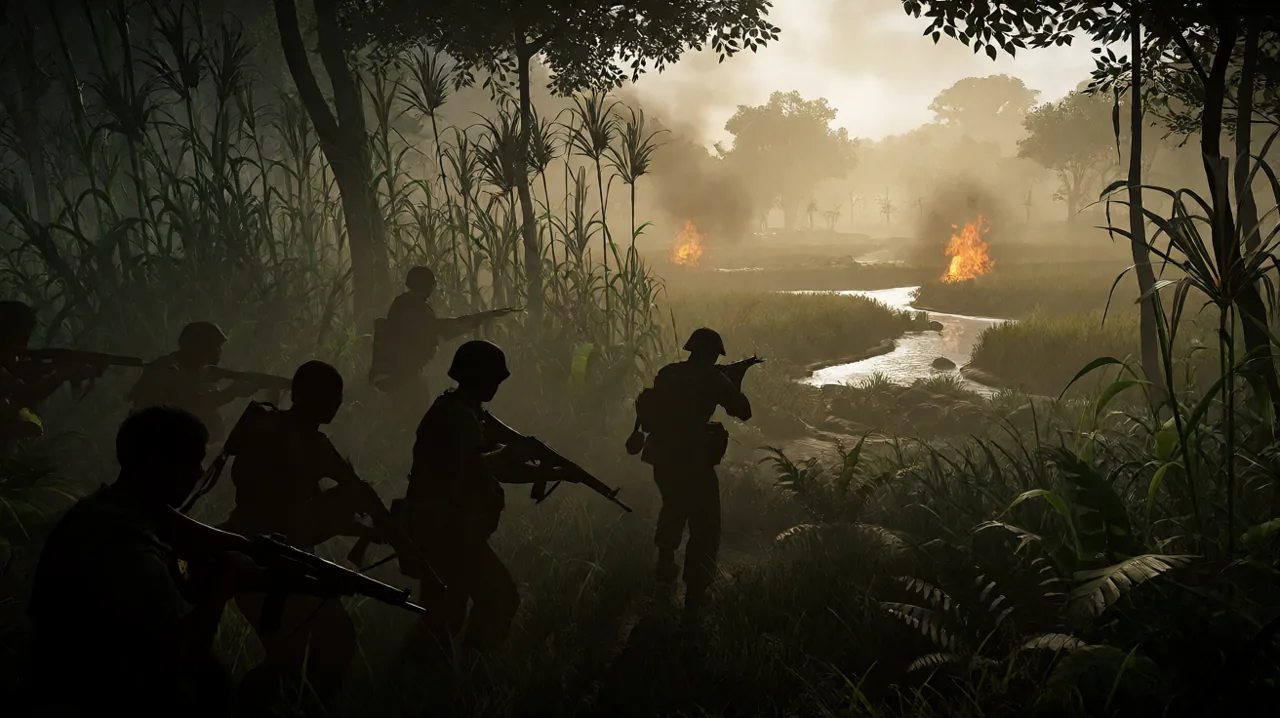
The transition from the European theater of World War II to the claustrophobic, unpredictable jungles of 1960s Vietnam represents a massive paradigm shift for the Hell Let Loose franchise. The traditional frontline push—where teams methodically advance armor and infantry lines across open fields—has been heavily disrupted by the realities of asymmetric warfare. In Hell Let Loose: Vietnam, the map is highly porous. US forces utilize Hueys to insert squads directly behind enemy lines, while NVA forces rely on expansive tunnel networks to bypass heavily defended choke points. In this chaotic, non-linear environment, the Recon squad becomes the most vital asset on the team.
However, many players stepping into the boots of the Recon Spotter are finding themselves lost when operating deep in locked enemy territory. Based on recent community discussions and gameplay mechanics testing, surviving and thriving behind enemy lines requires a deep understanding of the newly implemented weight system, the nuances of resource sabotage, and how to properly exploit the incredibly dense Unreal Engine 5 foliage.
The Spotter’s True Purpose: Sabotage Over Kills
Players transitioning to the Spotter role often experience a severe learning curve. The in-game training heavily emphasizes that the role’s primary purpose is infiltrating behind enemy lines. The unique ability for Recon squads to place an Outpost deep in locked enemy territory perfectly supports this mandate. However, many players eventually manage to sneak into the enemy Headquarters (HQ) and immediately hit a wall of confusion, frequently asking on community forums, “What exactly am I supposed to do here besides camp the spawn?”
Spawn camping is a highly debated tactic. While picking off players as they spawn might disrupt the enemy momentarily and pad your personal statistics, it rarely wins Warfare matches and almost always draws unwanted attention to your hidden Outpost. A frustrated enemy team will quickly organize a sweep of their HQ to root you out.
The true objective of a Spotter in the enemy HQ is strategic dismantling and infrastructure sabotage. You are there to locate and destroy the enemy Commander’s resource nodes—Munitions, Manpower, and Fuel. These nodes dictate the enemy’s ability to call in artillery, spawn vehicles, and utilize commander abilities. Furthermore, you are there to hunt down defensive Garrisons placed just outside the HQ sectors and relay the movement of heavy armor and transport helicopters before they even reach the active combat zone. For players looking for broader squad tactics beyond the Recon role, checking out our tips and tactics is highly recommended.
The Level 10 Grind: Explosives and Efficiency
Here is where the reality of the game’s progression system sets in. A major frustration reported by the community is the lack of immediate destructive capability for novice Spotters. If you want to rapidly dismantle a heavily fortified enemy spawn or instantly wipe out a cluster of resource nodes, you need explosives. However, the most effective explosive loadouts for the Spotter are reportedly locked behind Class Level 10.
This creates a significant dynamic early in your progression. Before hitting Level 10, Spotters are forced to manually dismantle nodes and spawns. Manual dismantling is agonizingly slow. It requires you to stand completely still in the open for a prolonged period, making you a sitting duck for any enemy spawning in to defend their territory. It turns routine sabotage into a high-risk, white-knuckle operation where every second counts.
Expression Games likely designed this progression gate intentionally. By restricting heavy explosives to Level 10, they prevent brand-new players from easily griefing the enemy’s logistical network within the first five minutes of a match, reserving the rapid-sabotage capabilities for veteran Recon players who have invested serious hours into mastering the class. Until you reach that coveted Level 10, your primary weapon is your radio, your binoculars, and your patience. For a full breakdown of loadouts across all classes, visit our roles and classes guide.
Decoding the Weight System Mechanics
If you are planning to trek across the massive maps of Hell Let Loose: Vietnam, you must account for a completely new mechanic that the community is currently dissecting in great detail: the Weight System.
In the original WWII title, a soldier carrying a bazooka moved largely the same as a standard rifleman. Extensive community testing in the new Vietnam installment indicates that this arcade-like movement is gone. The newly implemented Weight System reportedly impacts your overall movement speed, stamina regeneration rate, and even weapon sway based directly on the gear you have equipped.
For a Recon squad, this introduces a crucial layer of tactical decision-making before you even spawn. A Spotter running a light, entry-level loadout—focused purely on binoculars, a standard rifle, and a radio—can move swiftly through the jungle. They can bypass patrols, scale difficult terrain without heavy stamina penalties, and react quickly to unexpected encounters.
However, once you unlock that Level 10 loadout packed with heavy explosives for HQ sabotage, your mobility will suffer drastically. The extra weight means you will burn through stamina significantly faster when sprinting to avoid a Huey’s searchlight or a river patrol boat. You will need to plan your infiltration routes far more carefully, moving from cover to cover and allowing time to rest. You can no longer sprint endlessly across a waterlogged rice paddy and immediately snap your rifle to a perfectly steady aim; the physical weight of your sabotage gear will actively fight against your character’s endurance.
Unreal Engine 5: Using the Jungle as Your Cloak
To successfully operate behind enemy lines burdened by heavy gear, you have to stay entirely hidden. Expression Games has heavily leveraged Unreal Engine 5 to capture the density of the Vietnamese jungle with incredible, suffocating fidelity. This is not just a cosmetic visual upgrade; it fundamentally alters how reconnaissance and stealth are executed.
The incredibly dense foliage, thick underbrush, and dynamic lighting shadows offer unprecedented opportunities for concealment. When placing your Outpost in locked enemy territory, you no longer have to rely on hiding it behind a convenient brick wall or inside a barn. You can bury your spawn point deep within a cluster of dense ferns, inside a hollowed-out tree root system, or beneath the overlapping canopy of massive jungle trees.
This environment requires a major shift in how players process visual information. You are no longer scanning for distinct human silhouettes against a clear horizon; you are looking for unnatural movement within a chaotic sea of green and brown. While NVA and VC forces have their own unique methods of concealment and mobility—detailed extensively in our tunnel guide—US Recon units must become absolute masters of the brush. The visual noise created by the high-fidelity UE5 engine works heavily in your favor, allowing a patient, motionless Spotter to remain completely undetected even as a full enemy infantry squad marches mere meters away.
Coordinating with the Commander for Maximum Impact
Operating in complete isolation is a guaranteed way to lose the match. The intelligence you gather in the enemy HQ is entirely useless if it isn’t communicated clearly to your Commander. A Spotter’s most powerful tool is their voice.
When you locate a cluster of nodes that you cannot safely dismantle manually, or a defensive Garrison that is too heavily fortified with barbed wire and defenders, your job is to mark it accurately on the map and call in the heavy hitters. In Hell Let Loose: Vietnam, this means coordinating devastating artillery strikes or vectoring in a Huey gunship to suppress and clear the area before you move in to finish the job.
This tight synergy between the Recon squad and the Commander is what wins Warfare matches. A Commander who knows exactly where the enemy armor is spawning can position friendly anti-tank units perfectly. If you find yourself frequently stepping into the leadership role to utilize this intel, our guide on mastering the commander role provides deep insights into how to leverage your Spotters effectively.
Staying Updated: Hotfix 1.4.2
As the meta continues to evolve and players uncover the deeper nuances of the Weight System and Recon progression, the development team remains highly active. The recent deployment of Hotfix 1.4.2 addresses ongoing community feedback, squashes critical bugs, and implements minor performance tweaks to keep the servers stable.
Staying informed on these patches is critical for dedicated Recon players. Even minor developer adjustments to movement speed, stamina regeneration, weapon sway, or foliage rendering distances can instantly shift the balance of power for players operating deep behind enemy lines. Keeping a close eye on these official updates will ensure your infiltration tactics remain sharp and relevant in the brutal combat of Vietnam.