Hell Let Loose: Vietnam Devs Address Foliage and Spawns While Veterans Debate Tank Mechanics
Expression Games details stability gains and ongoing spawn fixes in Community Feedback #7, as tactical shooter veterans debate structural changes to armor squads.
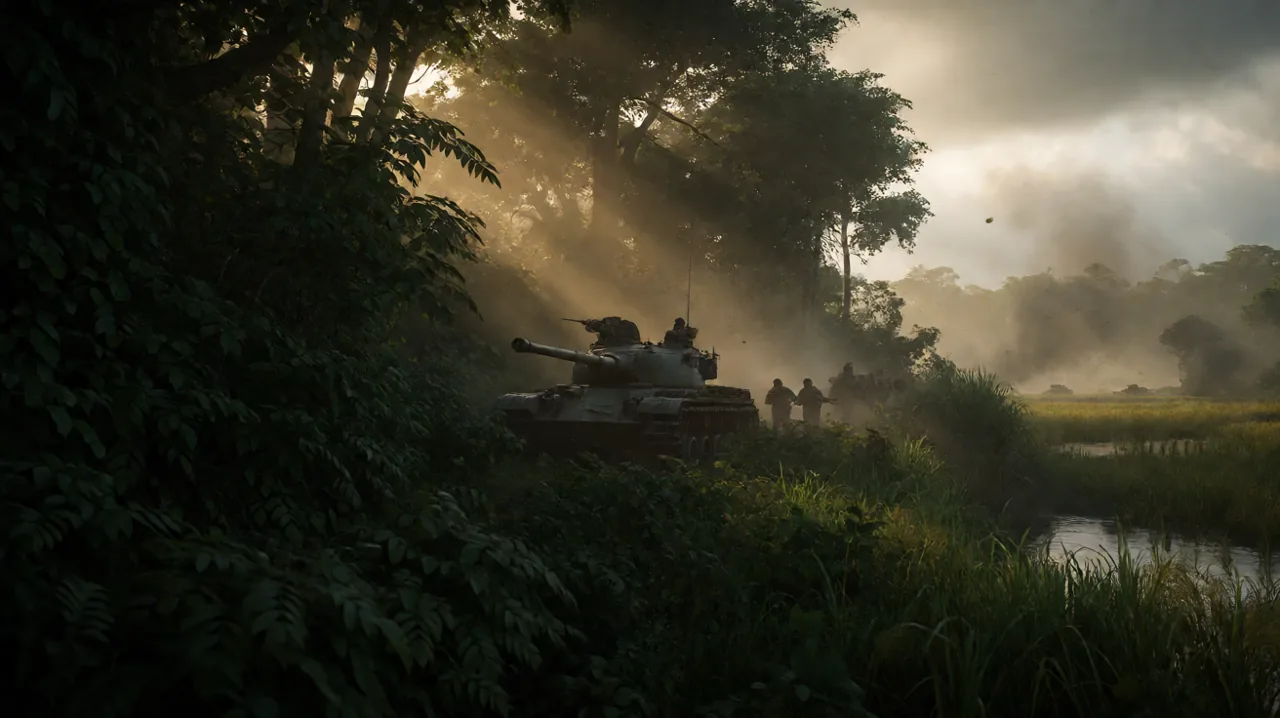
The dust is beginning to settle on the battlefield following the recent deployment of Patch 1.6, and Expression Games has returned with another direct communication line to the player base. In the latest Command Post dispatch—specifically Community Feedback #7—the development team outlines the immediate road ahead, focusing heavily on post-patch stability, frustrating spawn anomalies, and the complex debate over jungle foliage rendering.
While the studio works to tighten the technical infrastructure of this Unreal Engine 5 shooter, the community is engaging in deep, structural debates about the game’s core mechanics. Most notably, veterans from other classic Vietnam War shooters are coming forward with compelling arguments on how to handle armor squads and artillery to prevent one-sided steamrolls in casual public lobbies.
The Command Post: Stabilizing the Frontlines
When Patch 1.6 arrived, it introduced a sweeping audio overhaul, crucial adjustments to buildables, unit composition tweaks, and heavily requested improvements to the server browser and Vote Kick systems. According to the developers in Community Feedback #7, the initial telemetry and player response have been largely positive. Expression Games noted that the changes to buildable deployments and the increased visibility of Vote Kick prompts have translated into smoother, more functional matches.
However, the most critical takeaway from the recent communication is the state of client stability. Since the turbulent launch window and the subsequent Hotfix 1.5.2, desktop crashes have been a primary concern, particularly for users running AMD hardware. The latest telemetry data provided by the studio paints a highly optimistic picture: crash rates have plummeted. The monitoring period following the deployment of Patch 1.6 shows significantly fewer total crashes compared to previous builds.
This marks a massive technical victory. Maintaining a stable 50v50 environment featuring Huey helicopters, dynamic weather events, and dense jungle environments is incredibly demanding. With the baseline stability finally reaching an acceptable threshold, the developers are now pivoting their engineering resources toward resolving gameplay-affecting bugs rather than tracking down fatal system errors.
Untangling Spawn and Replication Anomalies
With the game client staying upright, the focus shifts to how players physically enter the battlefield. Community Feedback #7 explicitly highlights ongoing investigations into spawn and replication issues. In multiplayer game development, “replication” refers to how server data is synchronized across all connected clients. In the context of Hell Let Loose: Vietnam, replication bugs manifest as players spawning in incorrect orientations, vehicles rubber-banding across the terrain, or infantry rendering out of sync with their actual server position.
Spawning has always been the heartbeat of the tactical loop. The placement of Outposts (OPs) and Garrisons dictates the entire flow of the frontline. When spawn mechanics break down—whether it results in players getting stuck in deployment screens, spawning mid-air, or clipping into environmental geometry—the match pacing falls apart.
The fact that Expression Games has publicly prioritized this in their feedback loop indicates they are actively restructuring the backend synchronization. This is especially vital given the introduction of aerial insertions. If a squad attempts to spawn on a contested Landing Zone and the server replication fails, it results in an incredibly frustrating drop.
The Foliage and Visual Quality Tightrope
Another major bullet point in the latest developer brief is “foliage and visual quality.” In a Vietnam War setting, the jungle itself is a primary antagonist. The dense canopies, thick underbrush, and towering elephant grass are essential for establishing the atmosphere and dictating infantry engagement distances. However, this level of environmental detail creates a persistent headache for competitive balancing.
The community has been highly vocal about the disparity in visual quality and rendering distances across different PC configurations. If a player running on low graphical settings can see through foliage that completely obscures the vision of a player on “Epic” settings, the integrity of the firefight collapses. Expression Games is reportedly analyzing feedback regarding how foliage renders at extreme distances, the aggressiveness of the Level of Detail (LOD) culling, and the overall clarity of the image.
The studio must walk a very fine tightrope: optimizing the game to ensure high frame rates while preventing players from exploiting graphical sliders to gain an unfair line of sight. Given the asymmetrical nature of the combat—with the NVA and Viet Cong heavily relying on camouflage and tunnel ambush tactics—getting the foliage rendering right is absolutely paramount to the game’s long-term health.
Veteran Perspectives: The Armor Squad Dilemma
While Expression Games tackles the technical hurdles, the player base is actively dissecting the game’s structural design. A recent and highly discussed piece of feedback surfaced from a seasoned tactical shooter veteran boasting over 1,500 hours in Rising Storm 2: Vietnam. This player voiced a concern that many have felt since the game launched: the frustrating friction of the Armor Squad system and its impact on the recent player retention drop-off.
In the standard Hell Let Loose framework, operating a tank requires players to create or join a dedicated Armor Squad. This specialized unit has a strict capacity of three players: a Tank Commander and two Crewmen. While this system brilliantly enforces teamwork and communication when functioning as intended, it often falls apart completely in uncoordinated public matches. The veteran player highlighted a very common scenario: joining a server where enemy armor is relentlessly shelling the friendly base, yet the team has zero tanks on the field because no one wants to take the initiative to form an Armor Squad and herd random players into a vehicle.
The proposed community solution leans heavily on the mechanics of Rising Storm 2. The veteran suggests adopting a more flexible “Tank Crew” class system that isn’t strictly bound by squad creation limitations. Instead of needing a locked three-man squad to start the engine, players could simply select a dedicated vehicle crewman role from the spawn screen and jump into an available asset. Depending on the seat they occupy, they would assume that specific function—driver, gunner, or loader. This would allow a single player or two uncoordinated players to at least field a tank and return fire, mitigating total steamrolls. It would undoubtedly be less efficient than a fully communicating three-man crew, but it provides a fighting chance when a team lacks organized leadership.
Restructuring Artillery and Engineers
The critique extends beyond armored warfare. The same structural rigidity that restricts tanks also affects indirect fire support. Currently, artillery pieces located in the main HQ can be operated by anyone, typically a standard infantryman who spawns back at base, abandoning their squad to lob high-explosive shells across the map. This frequently leads to disorganized fire missions, accidental team kills, and squad leaders left frustrated by missing riflemen.
The community suggestion proposes restricting artillery operation strictly to an “Artillery Crew” class. Much like the proposed tank changes, players operating under this specific class could switch positions on the gun to aim, load, and fire without needing a fully organized squad, while simultaneously preventing random infantry from wasting valuable munitions. This formalizes the role and ensures that only players dedicated to indirect fire are operating the big guns, keeping standard infantry squads focused on the active frontline objectives.
Additionally, there are ongoing community calls to streamline the Engineer role. Expanding the Engineer’s autonomy to construct their full range of defenses with slightly less reliance on complex logistics chains could incentivize more players to actively fortify capture points, rewarding defensive strategies in Warfare mode.
Adapting the Tactical Formula
The discourse surrounding these community suggestions highlights a fundamental tension in Hell Let Loose: Vietnam. Expression Games has faithfully ported the hardcore, highly squad-dependent framework of the WWII original into the 1960s. When players communicate, utilize their microphones, and adhere to their designated roles, it provides an unparalleled military simulation experience. But when that communication breaks down in casual matchmaking, the rigid systems can feel punishing, leading to the unbalanced matches that frustrate new recruits and veterans alike.
The developers have proven they are listening closely. The rapid deployment of Hotfix 1.5.2, Patch 1.6, and the continuous communication through the Command Post updates demonstrate a clear commitment to refining the experience. The technical foundation is solidifying, with stability metrics looking better than they have in months. Now, the overarching question is whether the studio is willing to bend the foundational Hell Let Loose rules to better fit the unique asymmetric warfare dynamics of the Vietnam conflict.
Whether it means adjusting the spawn replication to ensure smooth aerial insertions, tweaking UE5 foliage to balance the NVA’s stealth advantage, or fundamentally rethinking how players crew a Patton tank, the road ahead remains incredibly active. Players should continue submitting detailed bug reports and engaging in these structural debates, as Expression Games is clearly reading the map and adjusting their coordinates accordingly.