Hell Let Loose: Vietnam Developer Q&A Part 1: Performance Upgrades and Map Enhancements
Expression Games details crucial performance optimizations, gameplay balancing, and new map designs in the first Hell Let Loose: Vietnam developer broadcast ahead of the August launch.
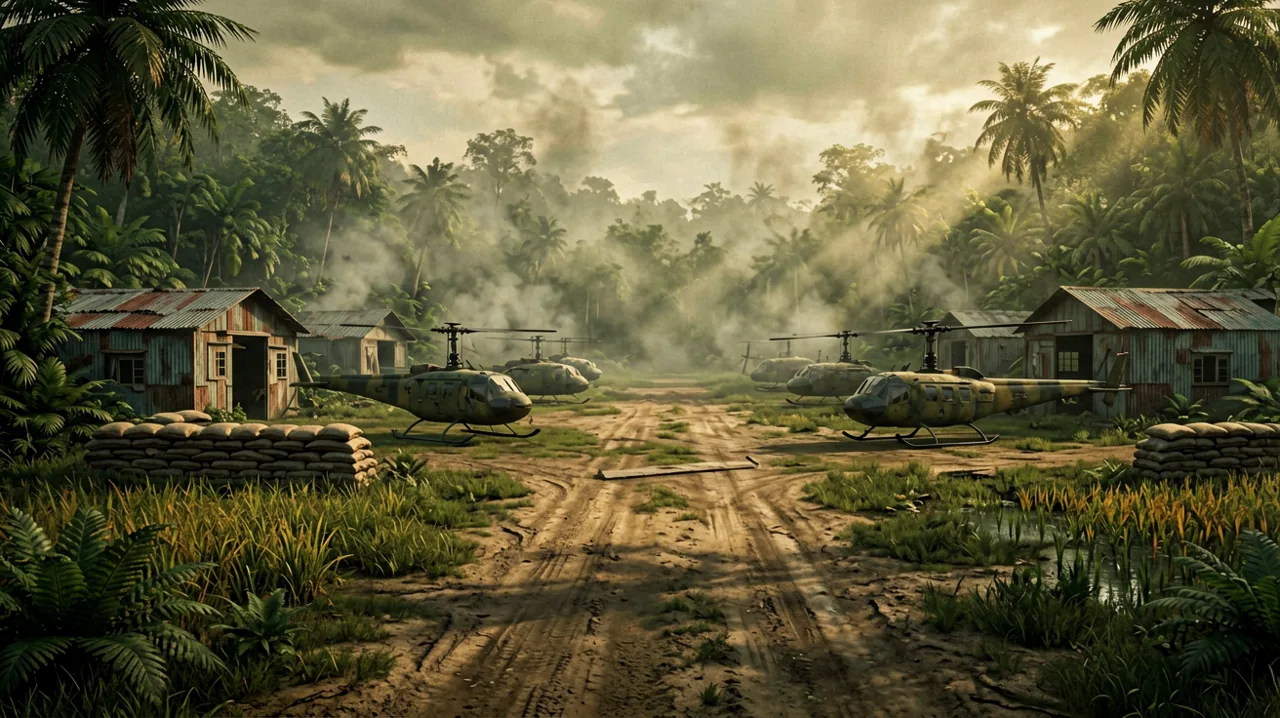
With the highly anticipated August 13 release date fast approaching, developer Expression Games and publisher Team17 have ramped up their community outreach. In a new official broadcast format titled “The Command Post,” the development team released Part 1 of their highly requested Developer Q&A. Sourced directly from questions submitted on Reddit and Discord, this session tackles some of the most pressing concerns raised by the player base following recent beta phases.
By focusing squarely on performance optimization, gameplay balancing, and map design, Expression Games is illustrating a clear commitment to delivering a polished 50v50 tactical shooter experience. The transition from the European theater of World War II to the dense, unpredictable environments of 1960s Southeast Asia is a massive undertaking, and this latest update provides crucial insight into how the studio is handling the final stretch of development.
The Leadership Behind The Command Post
The first Developer Q&A featured several core leaders from Expression Games, providing both technical and creative insights into the game’s current state. The panel included Game Director Paul Rustchynsky, Development Director Sam Warren, Senior Art Director Ryan Playle-Howard, and Studio Technical Director Kieran D’Archambaud.
Having these specific directors address the community highlights the studio’s recognition that technical stability and visual fidelity are the foundational pillars of the franchise. D’Archambaud’s presence as Technical Director is particularly relevant, given that community feedback during the beta phases heavily scrutinized frame rates, server tick rates, and overall client stability. Meanwhile, Playle-Howard’s input on the art direction reassures players that the grim, atmospheric reality of the Vietnam War—from murky river deltas to suffocating jungle canopies—is being carefully preserved while the technical team optimizes the underlying Unreal Engine 5 architecture.
Prioritizing Frame Rates and Performance Optimization
When addressing the most critical community question—“What has changed since the Open Beta?”—the development team did not mince words. The primary focus since the conclusion of the public testing phase has been a massive effort toward performance refinement. Transitioning the franchise to the organic environments of Vietnam presents an enormous hardware challenge. Unlike the ruined city streets or open fields of Normandy in the original game, the 1960s setting is defined by intense foliage, thick volumetric fog, and complex terrain geometry.
Rendering a 100-player server while maintaining stable framerates is difficult when every tree, bush, and blade of grass can conceal an enemy combatant or a deadly trap. The team emphasized that performance optimization remains their absolute top priority. In a hardcore tactical shooter where the time-to-kill is incredibly short, stuttering or frame drops during a firefight can completely ruin the experience and cost a team the match.
Expression Games is actively working to ensure that the rendering pipeline is smooth across PC, PlayStation 5, and Xbox Series X|S. The engine must be able to handle chaotic moments when artillery strikes, napalm drops, and small arms fire all trigger simultaneously within a localized sector. Players jumping into the upcoming tests should reportedly expect more consistent frame pacing and optimized memory usage, though the final system requirements will ultimately dictate the hardware needed to push the game to its maximum settings on PC.
Perfecting Asymmetrical Warfare Balance
Beyond strictly technical performance, the Q&A heavily emphasized ongoing gameplay balance. Hell Let Loose: Vietnam introduces a starkly asymmetrical design philosophy compared to its predecessor. The United States military relies on overwhelming conventional firepower and air mobility, utilizing UH-1 Huey helicopters to secure landing zones and rapidly deploy squads across the map. Conversely, the North Vietnamese Army (NVA) and Viet Cong guerrillas utilize extensive underground tunnel networks to bypass frontlines, set ambushes, and disrupt supply chains.
Balancing these two distinct styles of warfare requires massive amounts of telemetry data. The development team indicated that feedback from the Open Beta has been instrumental in fine-tuning how these mechanics interact. For instance, adjusting the cooldowns on commander abilities, tweaking the placement restrictions for Outposts and Garrisons, and refining the handling of 1960s-era weaponry are all ongoing processes.
The developers must ensure that the US forces’ aerial dominance does not render the NVA helpless. Helicopter pilots face immense risks from ground fire, requiring careful coordination with ground squads before attempting a landing. Similarly, the NVA’s stealth capabilities cannot make the US forces feel as though they are fighting invisible enemies; there must be reliable counter-play options for detecting and destroying tunnel entrances. Balancing the high rate of fire and lethality of the M16 against the rugged reliability and stopping power of the AK-47 is a delicate tightrope that Expression Games is actively walking as they finalize the weapon handling models.
Expanding the Frontlines: The New Airfield Map
Map design served as the third core pillar of the broadcast. The battlefields of the Vietnam War offer unique strategic challenges, heavily emphasizing verticality and limited sightlines. The team discussed the meticulous process of detailing the launch maps, ensuring they offer distinct tactical experiences rather than simply recycling jungle assets. From the muddy waters required for riverine combat to the dense highlands that necessitate slow, methodical infantry pushes, each environment is being polished to force squads into adapting their tactics.
According to recent press reports and community observations, Expression Games is integrating a new, more open airfield map into their testing rotation. This environment offers a stark contrast to the claustrophobic jungle maps players have experienced so far. An airfield provides much longer sightlines that will heavily favor dedicated marksmen, machine gunners, and organized armored support.
An open map also introduces unique challenges for the helicopter mechanics. Pilots will have to navigate open airspace without the visual cover of the jungle canopy, making them highly vulnerable to coordinated anti-air fire from the NVA forces. Testing this open terrain will give the developers critical data on how players handle engagements when natural cover is sparse and the deployment of smoke grenades becomes mandatory for infantry survival. It forces squad leaders to rely heavily on trench lines, sandbag bunkers, and craters to advance on objectives.
Crossplay and Community Testing
The timing of this Q&A broadcast is highly strategic, as it dropped just hours before a major Crossplay Playtest. This weekend’s test represents a pivotal moment for Expression Games to validate the performance optimizations and gameplay tweaks they have implemented since the previous beta.
Enabling crossplay between PlayStation 5, Xbox Series X|S, and PC players across Steam, Epic, and the Microsoft Store is a massive technical undertaking. Ensuring that console players remain competitive against PC players utilizing a mouse and keyboard requires precise input tuning, fair aim assist mechanics, and flawless server synchronization. The community’s response to this test will likely dictate the final adjustments made during the certification process for the day-one patch. It is highly recommended that players participating in the test actively use voice communications, as the complex dynamics of the new maps demand strict coordination between the Commander, Squad Leaders, and individual infantry roles.
Looking Ahead to Part 2 and Beyond
While Part 1 of the Q&A provided essential updates on the immediate state of the game leading up to the August 13 release, Expression Games is already looking further down the calendar. The studio has confirmed that Part 2 of the broadcast is coming soon, and it will shift focus away from current technical hurdles to look toward the future of the title.
The team has promised a behind-the-scenes look at the overall development process, giving players a glimpse into the historical research, audio recording sessions, and artistic consultation required to build an authentic 1960s combat experience. More importantly, Part 2 will outline the highly anticipated post-launch roadmap.
For a live-service tactical shooter, the launch is only the beginning of its lifecycle. The community is eager to learn about the cadence of future updates. Expected topics include the potential introduction of new factions (such as the ARVN or ANZAC forces), additional weapons, expansions to the river combat systems, and entirely new maps based on famous historical engagements like the Battle of Hue or the Ia Drang Valley.
As we close in on the final weeks before launch, this level of transparency from Expression Games is vital. Acknowledging performance flaws from earlier tests and publicly detailing the steps taken to fix them helps build confidence within the hardcore tactical shooter community. We will continue to monitor the results of the crossplay playtest and break down the details of Part 2 of the Developer Q&A as soon as it is released.