Community Calls for 'Bunker Garrisons' as US Spawn Points Struggle Against NVA Tunnels
Hell Let Loose: Vietnam players are suggesting napalm-proof bunker garrisons to balance the asymmetrical spawn system and counter resilient NVA tunnel networks.
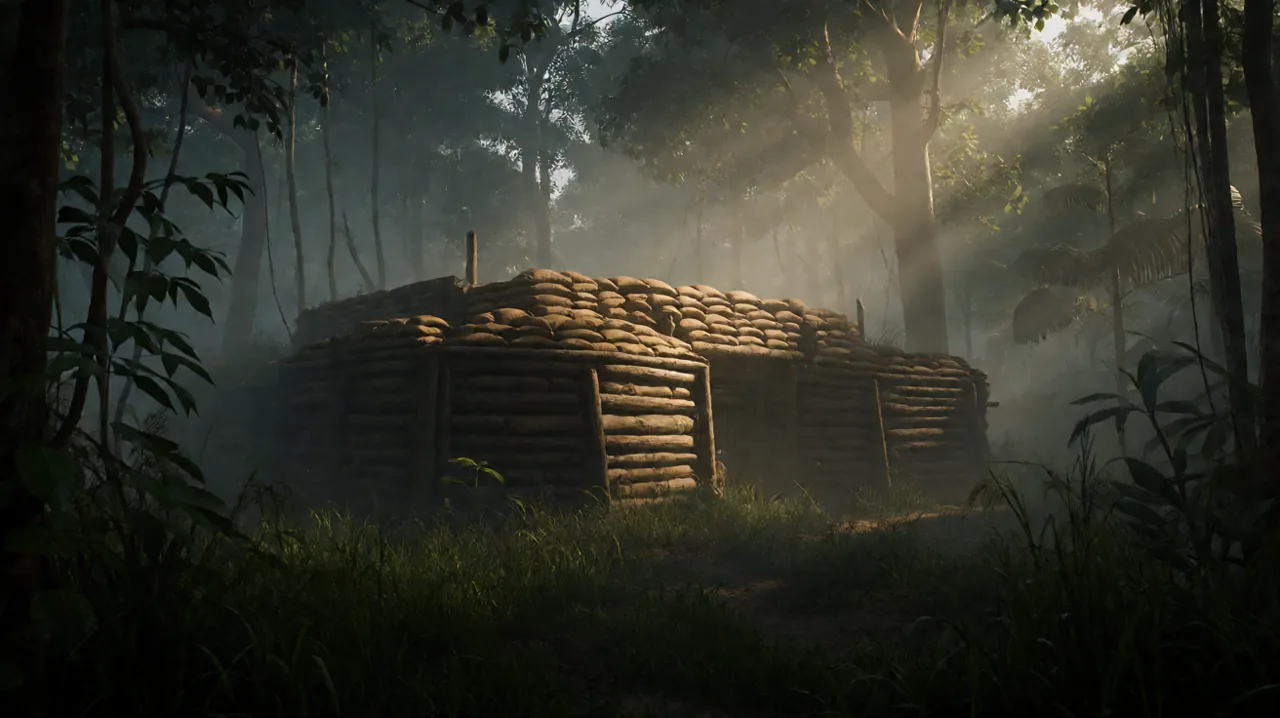
The core identity of Hell Let Loose: Vietnam lies in its radical commitment to asymmetrical warfare. Moving away from the relatively mirrored forces of the WWII European theater, Expression Games has leaned heavily into the historical disparities between the heavily mechanized, air-mobile United States military and the deeply entrenched, guerrilla-focused North Vietnamese Army (NVA) and Viet Cong. While this asymmetry looks phenomenal in the game’s gameplay reveal trailer, the reality of fighting on the ground is sparking an intense debate within the player base regarding spawn durability and match pacing.
Recent community feedback, gathered from extensive playtesting and early impressions, highlights a growing frustration among US teams: their Garrisons simply cannot survive the devastating area-of-effect weaponry present in the 1960s setting. As NVA forces utilize near-indestructible underground spawn points, US squads are increasingly finding themselves subjected to endless walks through dense, deadly foliage. The community is now championing a specific mechanical addition to level the playing field: the “Bunker Garrison.”
The Spawn Asymmetry: Garrisons vs. Tunnels
To understand the current friction, we have to look at how spawn networks operate for both factions. For the United States, logistics operate similarly to the classic WWII framework but with the addition of helicopters. Support players drop supply crates, logistics trucks drive materials to the frontline, and Huey helicopters hover dangerously close to the canopy to deliver heavy supply drops. With these supplies, Squad Leaders and the Commander can build Garrisons—surface-level tents and radios that serve as team-wide spawn points.
The NVA and Viet Cong, however, utilize a vastly different approach. Their spawn network relies on the infamous tunnel system. Tunnels function as discrete, localized spawn points that are significantly harder to detect from the air and are structurally shielded from surface-level shrapnel.
The primary issue plaguing the US side is the sheer lethality of the game’s Commander abilities. In WWII, a well-placed bombing run could clear a Garrison, but in Hell Let Loose: Vietnam, the introduction of Napalm strikes and heavy artillery means that vast swaths of the map are regularly turned into an inferno. According to community reports, US Garrisons currently struggle to survive for more than five minutes on contested points. A single Napalm strike can melt a meticulously crafted US spawn network, leaving the entire team stranded without a viable entry point near the objective.
Because NVA tunnels are subterranean or heavily fortified within the terrain, they largely shrug off these surface bombardments. This allows the NVA to maintain immense pressure on a strongpoint, instantly reinforcing their lines while the American team is forced to spawn at a Headquarters sector or a secondary, far-flung Garrison.
The Proposal: Napalm-Proof “Bunker Garrisons”
To combat this overwhelming NVA advantage, veteran players are proposing a tactical overhaul for the American engineering and logistics loop: the implementation of “Bunker Garrisons.”
The concept is straightforward but would dramatically alter the meta. Players are asking the developers to allow Engineers to construct heavily fortified bunkers—using a massive amount of supplies—that are explicitly immune to Napalm and standard bombing runs. If a Squad Leader places a Garrison inside one of these reinforced structures, that spawn point would survive the indiscriminate fiery destruction rained down by Commander abilities.
This would not make the Garrison invincible. The proposed balance is that these Bunker Garrisons would still be highly vulnerable to direct infantry assault, satchel charges from NVA sappers, or point-blank RPG fire.
Implementing this would solve multiple problems at once. Firstly, it gives the US team a fighting chance to hold a contested zone under heavy bombardment. Secondly, it deeply incentivizes the Engineer role, requiring a coordinated effort between Support, Logistics, and Engineers to fortify a position before a major NVA assault. Currently, building defensive structures often feels like a wasted effort if a single Commander strike can obliterate the personnel and the Garrison simultaneously.
The Brutal Reality of Jungle Pacing
The fragility of US Garrisons feeds directly into another major point of contention: the grueling pace of jungle warfare. In a recent 70-hour review posted by a dedicated player, the reality of losing your spawn points was laid bare.
When a Garrison falls, players are forced to rely on Squad Leader Outposts (OPs). These OPs are even more fragile, destroyed simply by an enemy walking near them. If the OPs fall, the US team faces a daunting task: walking back to the frontline.
Unlike the open fields of Sainte-Mère-Église or the snowy plains of Foy, the terrain in Hell Let Loose: Vietnam is incredibly restrictive. The maps feature towering elephant grass, dense canopies that block out the sun, and winding river deltas. Moving through this environment is inherently slow and terrifying. Players report spending 20 to 30 minutes slowly creeping their way back to the objective area, constantly listening for the rustle of leaves, only to be instantly killed by a well-camouflaged NVA sniper or an unseen ambush.
This dynamic transforms the game from a tactical shooter into what some frustrated players call a “walking simulator.” It places an agonizing burden on the Squad Leaders. If an Officer fails to maintain a hidden OP or push for a new Garrison, their entire squad is essentially removed from the match, stuck in a purgatory of endless jungle trekking. The high lethality and low visibility make establishing a foothold brutally difficult, reinforcing why the community is begging for a more robust spawn option like the Bunker Garrison to anchor their pushes.
Hardware Struggles in the Dense Foliage
The difficulty of spotting enemies in the jungle is compounded by the game’s performance demands. Hell Let Loose: Vietnam utilizes Unreal Engine 5 to render its incredibly detailed and dense environments. While it looks stunning on high-end rigs, mid-range and laptop gamers are feeling the heat.
Community reports indicate that machines running hardware like an RTX 4050 mobile GPU paired with an i7-13620H and 16GB of RAM are struggling to maintain smooth framerates. Even on Low settings—with Epic view distance enabled to spot distant targets—players are averaging around 40 to 50 FPS.
In a game where survival dictates noticing the slight movement of a bush or a helmet peeking out of a trench, low framerates and muddy textures put players at a severe disadvantage. The inability to clearly see the enemy, combined with the long respawn walks caused by destroyed Garrisons, creates a frustrating loop for those not playing on top-tier hardware. As players wait for further optimization patches, ensuring that your machine meets the system requirements is more critical than ever.
Awaiting Developer Response
Expression Games has a track record of listening to the community, especially regarding major pacing and balance issues. The asymmetrical design is a bold and welcome departure from modern shooter norms, perfectly capturing the oppressive atmosphere of the Vietnam War. However, an asymmetrical game still requires balance.
If the American forces are meant to rely heavily on overwhelming firepower and air superiority, they need a way to sustain a presence on the ground. Whether the developers implement the highly requested Bunker Garrisons, increase the supply cost of NVA tunnels, or adjust the lethal radius of Napalm against spawn radios, something will likely need to shift before the game’s expected launch.
Until then, American Squad Leaders will have to keep their heads down, hide their Outposts deep in the brush, and pray the sky doesn’t rain fire on their only Garrison.